Comic artists reach for a wider audience

Wanting to shed the image of an exclusive community, the country’s comic artists are holding an exhibition in a South Jakarta mall, to showcase their work to the public.

The Indonesia Comic Community (MKI) together with the Bellezza Shopping Arcade in South Jakarta have organized “Comic Days”, a week-long comic exhibition with workshops and discussions.

“We want not only comic artists and comic fans to come, but also the general public,” head of the the MKI, Rizqy R. Mosmarth said Sunday.

Indonesia’s comic art scene is not as commercially successful at home compared to the numerous Japanese manga comics in bookstores.

After its heyday in the 1970s, Indonesian comic art, with titles such as Si Buta dari Gua Hantu (The Blind from the Ghost Cave), went into hiatus.

Independent comic artists and studios attempted to revive the scene in the early 1990s when comic artist groups such as Komik Nusantara, Animik and Apotik Komik started to emerge.

Now, numerous independent comic artists and studios produce comic books.

Rizqy said that through the exhibition, they wanted to reach a wider audience.

Comic artists such as Ahmad Thoriq and Anto Motul — founders of the MKI — as well as Tita Larasati are taking part in the exhibition and workshops.

Bellezza Shopping Arcade spokesperson Audrey Aristanty said that organizers would change the display of the comics daily during the event.

At Sunday’s exhibition, social criticism was abound in most of the comics displayed. The graphic diary of Tita Larasati on display portrayed people on the street calling out “bule” (foreigner) to children walking with a lady.

After they entered a public van, the boy asked the lady what “bule” meant and whether it was a bad thing.

“It’s the only way they know how to treat difference,” the lady answered the little boy.

Another comic on display was Studio Paragraph’s Bondan, Undul and Lila: The death of coral reefs.

The characters were two children, Bondan and Lila, who were able to swim underwater without equipment after a fish, Undul, gave them special necklaces. The comic touches on issues such as environmental degradation and poverty.

Rizqy said the studio had created the comic for an organization that works in conservation, the Terangi Foundation.

One beautiful work that was displayed was Azisa Noor’s comic, which is a modern interpretation of the wayang story Rama and Shinta.

Rizqi said that they would hold a workshop on Jan. 23.

Prodita Sabarini, The Jakarta Post, Jakarta | Jakarta | Mon, January 18 2010

Four workers died while cleaning sewer, employer negligence suspected

Agung Supriadi was a calm curly-haired 21-year-old man, whom women of his neighborhood loved. On Dec. 22, he left for work in the morning to clean a sewer in Kampung Melayu, East Jakarta.

He did not make it home alive.

Agung died with three of his friends, Ridwan, Alif and Andi — all in their twenties — reportedly from asphyxiation while removing garbage from the Kalibaru tunnel, after being pushed by a strong current and running out of oxygen. The workers had been hired by East Jakarta Public Works Agency.

“Agung was a strong swimmer,” Agung’s oldest sister, 29-year-old Aci Sutarsih, said. “But, maybe there was too much garbage,” she said.

In her modest home, a square room with big wooden windows in Cipinang Besar, East Jakarta, Aci said recently she was shocked on hearing the news of her brother’s death.

Aci, who lost her parents nine years ago, raised Agung and her sisters on her own. Having no money, Aci and her siblings did not continue their education past elementary school.

Agung used to do odd jobs such as cleaning service or helping people move, Aci said. He would also sometimes busk with Ridwan, Alif and Andi.

“They were close friends,” Aci said, adding that Agung and the others were “sehidup-semati” (friends in life and death).

Agung had worked for the Public Works Agency as a daily worker for around one year, Aci said. He would receive Rp 35,000 per day.

“Sometimes he helped out by giving me some money,” she said. But mostly he used his wages for his own needs, which included taking his girlfriend out.

“I heard from his friends that they talked about getting married,” she said.

Police suspected the deaths of the four men was a result of negligence. Jatinegara Police detectives found that none of the workers had been given safety clothing or equipment before entering the sewers.

One eyewitness said they only had a flashlight, and on the day of their deaths it had been raining, causing the water levels to rise up to their waists.

“We suspect they died as they ran out of oxygen and were trapped in the water,” Jatinegara Police chief detective First. Insp. Supardjiono told reporters a day after the incident.

The police have questioned several witnesses, but have not named any suspects.

Jakarta Public Works Agency chief Budi Widiantoro said safety equipment had been prepared for the task.

“The incident occurred because of a sudden increase in water levels,” he said.

Workers were recruited for public works projects according to necessity, Budi said.

“The recruitment of workers is based on occasional needs, and is usually on a short-term basis… we do not give them year-long contracts, so they are not paid any occupational insurance on top of their daily wage,” he said.

A lot of people work without social or health insurance. Firefighters for example, who work in very dangerous conditions, are among the many who work for the public good without insurance.

Aci said she had received a total of Rp 10 million from the city administration following the death of her brother.

“I want to use the rest of the money to beautify Agung’s grave,” she said, adding that she was not sure how much was left.

“I used it for the burial and it was like rain when you spend money on those times,” she said.

Jakarta Manpower and Transmigration Agency chief Deded Sukandar, whose office oversees the implementation of work safety in companies, said in the case of Agung and his friends the employers had done enough.

“They gave money to the families,” he said.

Prodita Sabarini, The Jakarta Post, Jakarta | Jakarta | Thu, January 07 2010

Papua series: Papua development program aims to lure the young back to farming

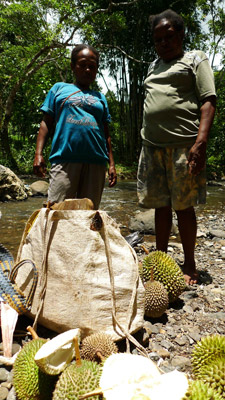
Durian feast: Two women stand over durian by the river in Serui, Yapen Islands. February is durian season and villagers in Serui can collect ripe durian from the ground and take them to market. (JP/ Prodita Sabarini)

As with many areas in Indonesia and around the world, people in Papua move from rural areas to the city.  However, having lived close to their land for thousands of years their competitive streak in setting up small businesses lags behind that of migrants who have for generations had the skills to run businesses, according to Rio Pangemanan, Oxfam program manager on the Papua Enterprise Development Program.

In no corner of the town of Wamena will one see a shop that is owned or run by indigenous Papuans. Indigenous women with their noken (traditional Papuan woven bags) hanging from their heads to their backs sell sweet potatoes or vegetables on a cloth in the street markets. Young strong-limbed Papuan men push rickshaws, some even in bare feet. Others  wander around  the markets, intoxicated from glue-sniffing.

UK based international development organization Oxfam is currently the only international NGO that is allowed to operate in the heavily policed province. Working with local partners, Oxfam has been supporting local farmers in five regencies in Papua in developing their farms and markets.

Oxfam supports the farmers according to the local needs and potential. For example, in Yapen Island, Oxfam has supported the Wamanuam Be Kitabono Yawa (WMY) Cooperative in cultivating vanilla beans. In Jayawijaya regency, the NGO has supported the Independent Business Foundation (Yapum) in cultivating and distributing sweet potatoes. Meanwhile in Paniai and Nabire Oxfam has supported their local partners in helping coffee farmers and in Jayapura, cacao farmers.

Oxfam’s contract ends next year, but Rio hopes that the NGO will get an extension for its programs. Rio said of the vanilla program in Serui that vanilla vines needed three years to produce beans, so new farmers would only have their first harvest in 2014. Rio said that by the end of 2014, he hoped the cooperative would be able to run independently.

Meanwhile in Wamena, Rio estimates that it will take two years for their partners to be independent in terms of management. He said that if the local government could take part in transportation and distribution of the produce, Oxfam’s partners, such as Yapum, would be able to operate independently once their management capacity had been strengthened.

In his office in Serui, Apolos Mora, the head of WMY cooperative said that for years vanilla trees grew in the wild in forests in Yapen. The Dutch brought the seeds when they opened coffee and chocolate farms on the island in the 1950s. “Before they [the Dutch] could teach the local people to cultivate vanilla, there was the transfer of power to Indonesia,” Apolos said.

One day in 2008, Apolos was reading about vanilla in the bookstore and an “Aha!” moment hit him as he realized that these plants were the ones that grew wild in the forest. When Madagascar, the largest vanilla pod producer in the world, had poor harvests, the price of vanilla pods skyrocketed to Rp 3 million (US$309) per kilogram, Apolos said. Apolos then decided to cultivate vanilla vines and trained the farmers joining his cooperative to plant vanilla too. He sells the pods to Manado, where they are exported to Europe, the US, Australia and New Zealand.  Recently, the price for dried vanilla pods was Rp 115,000 per kilogram.

PDEP manager, Rio Pangemanan, said that Oxfam supported programs according to the characteristics of the area. The island and coastal areas are more developed than the mountain areas due to ease of access to other islands in Indonesia. The mountain areas meanwhile are more isolated. This results in a different variety of crops that can be profitable to produce. While farmers in Serui can sell their crops in Manado, in Wamena farmers can only sell locally.

In Jayawijaya, Oxfam supports farmers revitalizing their sweet potato farms. Partnering with Yapum, they have developed 20 sweet potato collecting points in Jayawijaya that will distribute the crops to the markets in Wamena. Rio said that these collecting points had become a place for farmer’s advocacy and education to motivate the community to return to their farms instead of leaving for the city.

Local NGOs such as Yapum and WMY cooperative say that it is not always easy advocating for farmers to cultivate vanilla beans or sweet potatoes. Farmers’ programs in Papua are often project-based, in which farmers are given money to open rice paddies or fishponds. Once the funds dry up, the projects become neglected.

Eli Tabuni, the secretary of one of the sweet potato collecting points was one of the farmers who questioned the program. “This [sweet potato farming] is our culture, why are you making a project out of this?” he asked Yapum and Oxfam during their visit there. He said that many of the programs were only temporary and were not really helpful.

Kiloner Wenda, Oxfam Sweet Potato project officer in Jayawijaya, answered Eli in the Lani language with another question. “Where are the young people now who will work on the farms?” he said. “If we don’t start now, then our culture will slowly disappear,” he said.

Rio said that the projects aimed to support indigenous Papuan farmers in developing their business sense and opening their access to markets. In Wamena, women carrying their sweet potatoes from their villages to the market have to pay for transportation to the market for their heavy bags.

Yapum encourages them to sell the potatoes for Rp 5,000 per kilogram, and they only need to drop their crops at the collecting points. This way, the women did not have to travel far to the markets and could save on transportation, Rio said.

In Serui, the program has managed to attract young farmers, but in Wamena, whether the program will succeed in bringing the young back to the farms is yet to be seen. For the kids that like to play in the farm, their dreams are to be pilots and teachers, they say. But they will always love eating sweet potatoes.

— JP/Prodita Sabarini, Yapen, Serui

Prodita Sabarini, The Jakarta Post | Reportage | Wed, March 27 2013

Papua series: Laboring mamas, chopped fingers

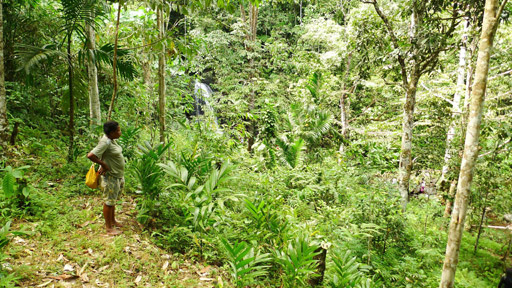
Taking a breather: Weldemina Mora looks at a waterfall in Serui, Yapen Islands regency. In Serui, some Papua vanilla vineyards are located on customary land belonging to the Yawaunat people. (JP/ Prodita Sabarini)

A mama walks barefoot under the skin-burning sun in a hamlet in Piramid district, Jayawijaya regency. With their traditional woven bags (noken) dangling from their heads, Papuan women, lovingly called mama-mama, dig into the earth to harvest sweet potatoes.

Orina, 30, is one of the mama-mama. Last week was harvest time in her village, Yonggime. Carrying her 3-year-old-son Samuel to the field on her shoulder, she steadies the weight of her noken on her head.

“It’s hard work,” she says. “We sweat a lot and we dig using shovels,” she said. The shovels that the women use are made from thin long metal with flat tips. Most tiring, she said, was that they had to carry their noken and their babies or toddlers with them to the field. Sometimes women carry three bags on their head, one for their offspring and the others for collecting the harvest.

The bulk of the work on farms in Papua falls to women. Most indigenous Papuans in the mountainous highlands such as in Jayawijaya regency live from farming. Families grow sweet potatoes for their daily meals, as well as for their pigs. The rest, they sell in the markets. Women are usually the ones who travel to the markets carrying heavy loads on their heads. The sweet potatoes, or hipere in the local language, can grow as big as a newborn baby, weighing around 5 to 10 kilograms each.

“Men open the fields, build the fences and dig irrigation channels, but that’s it. The people who tend the fields, plant and toil, harvest and feed the cattle, are the women,” Patricio Wetipo from the organization, Humi Inane (Women’s Voice) Foundation, said in Wamena recently.

In Indonesia’s easternmost province, indigenous women are marginalized and often become victims of violence both from outside and inside their communities. The security approach in the restive province has seen many women suffer sexual violence at the hands of Indonesian Military (TNI) personnel, as documented in a 2009 study by the National Commission on Violence Against Women (Komnas Perempuan).

Women are also second to men within their communities. Besides having a heavier workload, they were not included in decision-making in tribal communities, Patricio said. Polygamy and adultery was rife, he added, and with Papua being the Indonesian province with the highest rate of HIV/AIDS, a lot of women contract the virus from their husbands. Patricio said that his organization had documented 370 reports of violence against women in Jayawijaya alone.

One can see the stark difference between men and women with the grieving customs of communities in the central mountains. Women in those tribes cut off the phalange of a finger as a sign of grief when a member of their family passes a way. The men, meanwhile, make only a tiny slice in the tip of their ears. The government has banned this particular practice, but one can still see many women with short, stumpy fingers, including younger women.

But conditions for women are changing — albeit slowly; development programs that incorporate gender equality are opening up access for women to become community leaders.

In Wamena, Sarlota Itlay, 42, stands out as the head of a farmers’ group in Musaima village, a position that she’s proud to hold. The single mother of four describes her position as “one that’s rare in Papuan custom”. When development NGO Oxfam started a Papua Enterprise Development Program (PEDP) in Wamena in 2009, the single mother joined the group of 55 farmers that opened 10 hectares for sweet potato cultivation.

She was the only woman that spoke a lot during discussions with Oxfam and the Independent Business Foundation (Yapum), Oxfam’s local partner, she said. In 2010, she was appointed head of the farmers’ group. Her leadership caught the eye of the local Hubikiak district administration and she was appointed as the village secretary, giving her a role in the day-to-day administrative affairs.

Rio Pangemanan, Oxfam’s PEDP manager, said that when devising programs to support entrepreneurship within indigenous Papuan communities, they ensure that women’s ideas and roles are clear. They separate discussions between women, men and community leaders to ensure that women’s aspirations are heard before planning the program.

Patricio also uses this technique in his awareness-raising campaigns.

“We talk with the women in the communities about women and men’s positions in customary law, whether there is violence or not and, if so, what forms of violence they experience,” he said. Patricio then talks with the men on the same topics. In the end, the men and women gather for a dialogue about women’s roles and violence against women in their community.

Change was slow, he said, but women were becoming more confident and courageous in expressing their objections about things they felt were unfair.

In Wamena, religious institutions are also playing a role in empowering women. In a Catholic boarding house for girls in Wamena, some 30 girls sit on a carpeted floor and discuss their rights as women. Led by Deacon John Jonga, a Catholic priest and human rights activist, the girls, who are in junior high and high school, shared their stories of how they felt having a lower status compared to their brothers. They also said they had to work harder on the farms during their school breaks compared with their brothers.

Deacon John had the girls laughing when he cracked a few jokes about how hard it must be for them having been born girls. But he was very serious when he asked them what they wanted when they grew up.

“Do you want to be the young wife of an old tribal leader?” he asked. “I know a woman who used her savings to pay the dowry for her husband’s new wife. Would you like that?” he asked. The girls giggled and shook their heads. Marcela Logo, 17, said that if her future husband treated her badly and had another woman, she would leave him.

“You are worth it, you’re equal to men, and you deserve to be free from violence,” Deacon John said. The girls’ eyes grew wider, and an optimistic glint showed in their smiles.

— JP/Prodita Sabarini, Wamena, Jayawijaya

Prodita Sabarini, The Jakarta Post | Reportage | Wed, March 27 2013


Papua series: Money in the farms

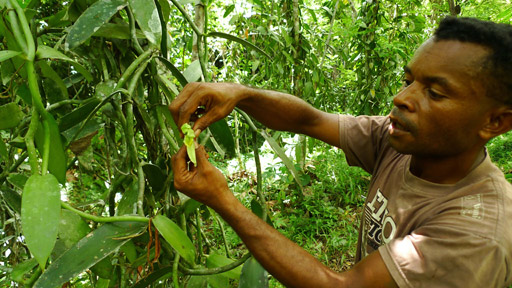
Gentle handling: A vanilla farmer pinches vanilla pods to help pollination. Farmers in Serui, Yapen Islands regency, Papua, are starting to cultivate vanilla for export to Europe and the US. (JP/ Prodita Sabarini)

Returning to the land may be one way to improve food security and welfare in Papua. The Jakarta Post’s Prodita Sabarini was recently among a group of journalists invited by the Britsh NGO Oxfam to examine a few of their programs in Serui and Jayawijaya regencies in Papua. Below is her report.

Seth Jenggo Mora sits under vanilla vines in Serui, a town in Yapen Island off the northern coast of Papua that resembles a bird’s neck. He sings a Yawaunat tribe song about the perils of leaving one’s home. “If I leave and return to my village/what will I have there?” he sings. “If we go abroad, when will we become a man?”

His red lips and teeth, reddened from chewing betel nuts for more than half a century, formed a smile as he finished his song. From Yapen where Serui lie to hamlets in the central mountains of Jayawijaya, traditional songs hold a deep meaning in Papuan culture. When reporters and NGO workers visited a village in Piramid district of Jayawijaya regency, Papuan men greeted visitors with tearful alments expressing their gratefulness of having guests from faraway places.

The song that Seth sung has relevance in today’s Papua, where urbanization has taken some of the young away from the rural areas to the big cities, leaving the traditional farms neglected.

As indigenous Papuans trail behind in education and economic power compared to migrants from Sulawesi, Java, or Sumatra, some young people who live in the cities end up turning to petty crimes or prostitution.

A large number of residents have contracted HIV, sending the number of infected people to the roof. According to the Health Ministry, Papua has the highest number of HIV infections in Indonesia, recording 7,572 cases between 1987 and 2012.

The Central Statistics Agency (BPS) said that urbanization in Papua has increased by 3.76 percent between 2000 and 2010, when 25.96 percent of the population, or 735,629 people, lived in cities, compared to 22.2 percent a decade before.

In Papua, more than 70 percent of the people live from farming. Taking extractive industries out of the equation, agriculture contributed 25.74 percent to Papua’s gross domestic regional product (GDRP) in 2012.

The mining industry in the resource-rich province contributed 46.52 percent to Papua’s GDRP in 2012, but absorption of local workers has been low. In 2010, only 26,747 people, mostly migrants, worked in extractive industries. In Timika, more than 70 percent of the population are migrants, according to the 2010 census.

As agriculture holds an important role in the lives of indigenous Papuans, developing the local economy by empowering farmers might help realize their basic rights for sustainable livelihood, according to Rio Pangemanan from Oxfam, which has a number of programs involving farmers in Papua.

Farmers and NGO workers in Papua report that a change of eating habits, with the introduction of rice as staple food from Java and with the government programs of rice for the poor, has jeopardized the self subsistence of villages and the livelihoods of young people in Papua.

Jayawijaya Agriculture Agency head Paulus Sarira said that five years ago, 94 percent of the population consumed sweet potatoes as their main staple. “Now only around 16 percent of the people consume sweet potatoes. Some have turned to eating rice,” he told a seminar on food security in Wamena early this month.

Chris Manuputty, the special assistant to the Jayawijaya regent for governance and social welfare, said that the unchecked change of eating habits from sweet potatoes to rice might lead to a food crisis in Wamena in the coming years.

Petrus Wenda, 70, a farmer from Yonggime, a hamlet in Piramid district in Jayawijaya, is one of the local farmers who mourn the loss of young people from his village. In his sweet potato farm in the Baliem Valley of Jayawijaya, Petrus told visiting reporters that sweet potatoes were part of his culture. Small framed, Petrus became animated in telling the story of the benefits of sweet potatoes, or hipere in the local language.

He stepped back and jumped over an irrigation ditch to better express his feelings. His voice became louder and his movements became more animated. “See my right arm? I can defeat five men with this,” he said while stretching his right arm. “See my left arm? I can defeat five more with this,” he said, reaching out his hand. Petrus then stretched his right leg and said “I can kick with this”, displaying how hipere made him strong and healthy. “Rice tastes good but it makes your stomach ill,” he said.

There is a reason why Petrus is so passionate about sweet potatoes. According to him and other elders, the introduction of rice has made young people leave the villages for the city to earn money so they can buy rice instead of preparing their land for the women to grow sweet potatoes.

“A lot of young people go to the city and become robbers. They live there [in cities] and they end up dead,” Petrus said. “Now young people don’t want to plant sweet potatoes. All of them think they can make money in the city. In fact, the money is here,” Petrus said.

The Jakarta Post | Reportage | Wed, March 27 2013

Paper Edition | Page: 8

Election Series: Striving for 30 percent quota for women

Nihayatul Wafiroh, 33, granddaughter of a popular Islamic boarding school founder in Banyuwangi, East Java, had turned down offers from political parties to contest past elections. This year she relented and agreed to run for next year’s general election.

The researcher and consultant, who will represent the National Awakening Party (PKB) for the East Java electoral district covering Situbondo, Bondowoso and Banyuwangi, said that she was once apathetic to politics.

Coming from a family of Islamic clerics that runs the Darussalam Islamic boarding school founded by Mukhtar Syafa’at, the biggest in Banyuwangi with around 4,000 to 5,000 students and alumni, some political parties see her as an asset, she said. She is also the first woman from her family to earn her Masters in the US (for Asian studies) and the first to pursue doctoral studies. PKB had been trying to persuade her for the last two years and she constantly refused until late last year.

What changed her mind? “Last year I conducted research for Search for Common Ground [an international conflict and peace-building NGO] and interviewed female legislators […] I traveled to Yogyakarta, Kendari and many other cities. The quality of a lot of the female legislators that I interviewed was very low,” she said. “In NTB [West Nusa Tenggara] a female legislator was very shy just talking to me! Who am I? Imagine her having to talk and debate in the council or with her party members that are mostly men,” she said over the phone.

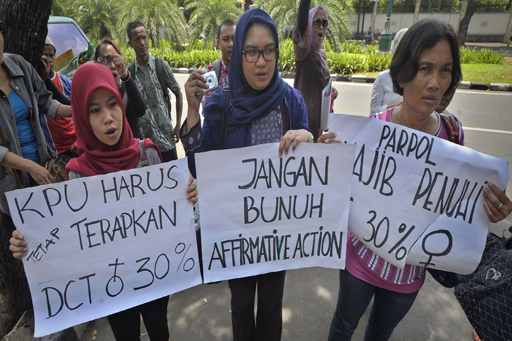
Indonesia is gearing up for the 2014 legislative election scheduled a year from now on April 9, 2014. Based on the latest amendment to the law on political parties, aimed to increase female representation in politics, the General Elections Commission (KPU) last month ruled that parties not meeting the 30–percent quota for female candidates would be disqualified from districts where they failed to meet the requisite number.

Nihayatul agreed to run on one condition — that her name should be on the party’s top list. “At least I should be number two on the ballot,” she said.

In the last election of 2009, and in 2004 after the law first mentioned the quota for women candidates for legislative bodies, many female candidates were among those who failed to be elected. While observers pointed to the fact that many were not popular, advocates for women also decried the practice of political parties of assigning them low numbers on the ballot, thus reducing their chances of people voting for them. The number on a ballot still determines a candidate’s chance to win a seat in the House of Representatives, while the number of votes designates their fate on the local legislative councils.

The question of quantity over quality became the hot topic raised by some political parties facing difficulties in reaching the quota. A number of parties have questioned KPU’s disqualification threat, arguing that parties would simply meet the quota irrespective of the quality of candidates. Activists have pointed out that political parties have had 10 years to prepare female cadres since the 2003 law on parties stated they “can” recruit 30 percent of women among their legislative candidates.

An NGO focusing on elections, Cetro, produced a book profiling 100 potential women interested in running for the 2004 elections. Cetro pointed out that many women were ready, as long as there was sufficient support from their families, communities and political parties, apart from national affirmative action policies.

Nihayatul’s political calling came from her personal experience that made her see the need for qualified female legislators. But many are still reluctant. A council member from Pasuruan, East Java, Rias Nawang Kartika of the Indonesian Democratic Party of Struggle (PDI-P) said that she would not run again for next year’s election. “That’s enough for me. I’d like to focus on my business,” the 51-year-old said. Her sister, who heads the regental branch of the Pasuruan Democratic Party, Evi Zainal Abidin, is applying as national legislator, only after being persuaded by many people, Rias said.

Political parties’ functionaries say there is a lack of interest in women to enter politics. “Many are reluctant, they think about their family, especially their children,” said PKS spokesman Mardani Ali Sera. The Indonesia Democratic Party of Struggle (PDI-P) head of cadre recruitment and selection, Idham Samawi, echoed the sentiment.

“Unfortunately, women are raised with the idea that they are konco wingking, confined only to housekeeping activities. We are trying to challenge this idea […] We have created special activities in which we want to convince women that they have the same opportunities and capabilities that men have,” he said.

Idham admits that there are more male party members than females, but added that PDI-P has numerous female cadres that have become regents and deputy governors. “Bantul regency, Yogyakarta, the place where I come from, has more than 30 percent female legislative candidates who are qualified,” he said.

PKS has also reached the quota, Mardani said. He said women make up some 37 percent of 15,462 candidates for national and regional legislators that the party plans to submit for the preliminary candidate list.

The head of the candidate selection task force of the Democratic Party, Suaidi Marasabessy, said last week that the party has exceeded the quota in total numbers, but not in some electoral districts. “If there are still some districts that have yet to reach the quota, we’ll move the candidates around,” he said on Wednesday. Both the Democratic Party and Great Indonesia Movement Party (Gerindra) said they are finding it difficult to reach the quota in rural electoral districts such as North Maluku.

The country has seen a gradual increase in female representation in parliament, but the percentage is still far from the 30-percent quota first introduced a decade ago in the law on political parties. The 2009 election brought 101 female legislators to the national parliament, or 18.04 percent of the total 560 seats. The 2004 election brought in 61 female legislators or 11.5 percent of the total number of legislators. Meanwhile, the 2009 election brought an average percentage of female representation to 16 percent at the provincial level and 12 percent at the regency and municipality levels.

Prodita Sabarini and Sebastian Partogi, The Jakarta Post | Reportage | Tue, April 09 2013

Election Series: Want to run? Show me the money first

When applicants to be legislative candidates for the Great Indonesia Movement Party (Gerindra) were interviewed, one of the questions they were asked was “Do you have enough money to run?” a Jakarta branch official said.

“Maybe they don’t have money. Or they do, but they borrowed it from someone,” said Syarif, the secretary of Gerindra’s Jakarta chapter. They should have their own money “because they have to order flags and T-shirts for their own campaign.”

It has often been said that politicians and elected leaders get involved in graft to pay off the debts incurred during their campaigns.

Running in an election costs money. Excluding the vote buying that sometimes besmirches elections, candidates need money to travel, put up banners and posters, order T-shirts, etc. “For people to know who they are, candidates have to campaign. Coffee for their team is the minimum expectation,” Syarif said.

“We ask candidates how many votes they expect to win and to calculate the cost of reaching that number of people,” he said.

Gerindra has yet decided how much money each candidate needs for the race. Syarif estimates that candidates running for local legislative bodies will need at least Rp 100 million (US$ 10,000), with that figure rising to about Rp 300 million for those running for the House of Representatives (DPR). Syarif said the costs were also needed to ensure the maximum presence and performance of party observers on voting day.

Former student activist Hendra Gunawan, cofounder of the Jabodetabek University Students Community Forum (Forkot) that helped topple Soeharto, reckons that having a lot of money does not necessarily determine the election result. “A lot of people perceive running for office to be very costly,” he said. Hendra is running for the Indonesian Democratic Party of Struggle (PDI-P) and tells of another candidate who spent Rp 20 billion on campaigning but failed to win a seat. Hendra did not mention how much he will spend on his campaign.

The Prosperous Justice Party (PKS) West Jakarta branch secretary Agung Setiarso said that the Islamic party receives donations from its widespread Koran reading groups. “We can raise Rp 1 million in each meeting,” Agung said. He also said that each neighborhood branch of the PKS usually has an election fund.

“Since most of the candidates are chosen by the membership, they automatically have to support their candidate,” Agung said. Agung is running for the Jakarta council, and he said that the party and the members would help him.

Prodita Sabarini and Sebastian Partogi, The Jakarta Post | Reportage | Tue, April 09 2013

Election Series: Parties struggle to seek right candidates

From April 9 to April 22 the 12 national political parties and three local parties eligible to contest the 2014 general elections are submitting their preliminary lists of candidates for the national and local legislative bodies to the General Elections Commission (KPU). The following is a glimpse of the recruitment process that involves the search for more than 240,000 candidates for over 20,000 seats. Based on interviews in Jakarta, The Jakarta Post’s Prodita Sabarini and Sebastian Partogi filed the following report.

In January, the Great Indonesia Movement Party (Gerindra) made an unprecedented move in the country’s politics: advertising in the national media to call for applications to run as legislative candidates with the party in next year’s election.

A number of other parties followed suit. The Democratic Party (PD) also made a public call with posters and banners as well as an announcement on their website with the tagline “The People Call for the Nation’s Best Sons and Daughters”.

Gerindra succeeded in attracting thousands of applicants, but it also raised skepticism of the effectiveness of such methods in netting qualified candidates.

The legislative election is one year from now and the General Election Commission (KPU) opens submissions for parties’ candidate lists starting from today until April 22. Ahead of the presidential election, the legislative race in April 2014 will contest over 20,000 seats for the House of Representatives and provincial, municipal and regental legislative councils (DPRD).

Over the past weeks the 12 national political parties and three local parties in Aceh province have been scrambling to prepare their shortlists. If all parties manage to get candidates for all available seats, there will be more than 240,000 candidates contesting the legislative elections.

Gerindra’s deputy chairman Fadli Zon said recently that nearly 3,000 people applied to run for House seats with the party. More than half of the applicants were new recruits from outside Gerindra, he said. But this also included those from parties that could not join the election, due to an increase of the electoral threshold to 3.5 percent of national votes. In the last polls, 34 parties joined the race.

Similarly, more than half of Gerindra’s 600-plus applicants for the Jakarta council were new recruits, according to Syarif, the head of Gerindra’s Jakarta chapter for its cadre division.

The Prosperous Justice Party (PKS) says it does not conduct recruitment that is open to the public. Its spokesperson Mardani Ali Sera said such methods would make the recruitment process seem like a regular job application. Similarly, a blogger in the citizen forum Kompasiana.com suggested anyone unemployed could apply to be a legislator.

Hopes are high that next year’s election will bring better legislators compared to the previous batch in the parliament and local legislative councils. The Corruption Eradication Commission (KPK) has urged parties to select better candidates, as legislators that were arrested and tried in court have been found guilty.

The recruitment and selection process differs from one party to the other. Parties that select candidates from within their political machine have started their preparation earlier than parties that recruit from the outside. The former tend to select candidates based on their track record in the party’s activities.

The Golkar party started preparations from February last year by holding functionaries’ orientation programs. “We don’t enlist candidates out of nowhere,” said Binny Buchori, head of Golkar’s Center for Membership Development and Leadership Training. “We have a rule that only cadres that have been in the party for five years and have gone through the functionaries’ orientation can run for legislative candidacy,” said Binny.

Incumbent legislators are also obliged to participate in the program if they want to reenter the race. Up to now, Binny said, around 2,500 cadres have graduated from the program. She said that more than 560 people are on the long list of candidates for the House.

Party leaders will select the names for the short list, based on their dedication to the party and their electability. Most of the incumbent legislators are running again. Binny, who failed to win a seat in the 2009 election, is among the prospective candidates.

PKS and the Indonesian Democratic Party of Struggle (PDI-P) started their preparations last November. PDI-P recruited prospective candidates from within the party from last November to late January. Its selection process started in February this year and included psychological tests, interviews, written tests and drug tests.

According to Idham Samawi, the PDI-P’s head of cadre recruitment and selection, party chairwoman Megawati Soekarnoputri had suggested the use of psychology tests in late 2011. “Ibu Mega was concerned over problems involving party members. Those who jumped ship to other parties, those implicated in criminal misconduct and those who bickered with fellow party members […] She decided that we needed to capture the psychological profile of party members,” Idham said.

He added that the test was also to determine candidates’ interest and capability.

Idham said that ideology was an important part in the selection process of PDI-P, known to be staunchly nationalist. He cited that if a prospective candidate appeared to have an agenda or a mindset about changing Indonesia into an Islamic country, the latter would not pass selection.

The PKS West Jakarta branch secretary, Agung Setiarso, said that in November the party started to announce in mosque gatherings that party cadres should recommend names to be listed for candidacy. He said that PKS’ selection process comes from the bottom up.

The West Jakarta branch fielded more than 30 names to recommend to the party’s Jakarta branch for the local councils and House seats.

PKS spokesperson Mardani said that they rank the candidates based on recommendations from each party level. A recommendation from an individual party cadre is worth one point; that of the party branch in the neighborhood unit is worth 10 points. The score multiplies by 10 up to the party’s national headquarters, where the recommendation is worth 10,000 points.

“You can’t really apply to be a candidate, you have to be chosen by others,” Agung said.

However a female prospective candidate for the PKS said that she approached the party leaders in Lampung province, expressing her interest in running in the election, and became short-listed.

So far PKS has fielded 15,462 prospective candidates for the parliament and local councils.

“We’re not forcing ourselves” to have candidates for all seats if applicants were not qualified enough, Mardani said. He added that 20 percent of their prospective candidates were from outside of the parties.

Parties that recruit from the general public started their recruitment and selection process this year. Gerindra started to publish its ads in the media late January and opened the application period for the whole of February.

Meanwhile, the Democratic Party made its public announcement in March, and opened the application process from March 6 to 31.

Officials of the Democratic Party’s recruitment division said that up to Monday some 1,070 applicants had applied to run for parliament seats. Some 30 percent of the applicants were new recruits.

The ruling party that has been plagued with graft scandals weighs the applicants based on their resume. Nurita Sinaga of the party’s recruitment section said applicants did not have to go through an interview or written tests.

“We rank them based on their resume, because from there we can judge their level of activity and networks,” she said.

The ranked list would then be submitted to the Democrat’s Supreme Assembly for selection.

Gerindra required applicants interested to run for national parliament seats to include videos of them meeting with the community.

The video shows whether the public is familiar with the applicant and whether the applicant can gather a crowd, Gerindra Jakarta branch secretary Syarif said.

Meanwhile, for applicants interested to run for local councils Gerindra required them to submit 1,500 copies of IDs, as proof that people in their respective electoral basis know them.

For the next step, Gerindra’s selection committee hires university students to verify the applicants’ diplomas and their local popularity. “You know there are a lot of fake diplomas out there, so the students go to the applicants’ university and ask whether they really graduated from those institutions,” Syarif said.

A student helping Gerindra, Lukman B Permana, said that some residents gave poor comments about applicants. “A lady said ‘Oh that guy, yeah, I know he’s running. He’s not active in the community.’ She seemed to dislike him a lot,” Lukman said, adding that the findings were submitted to the selection committee.

The last step for Gerindra was the interview. No less than the party leaders and founders — brothers Prabowo Subianto and Hashim Djojohadikusumo — were among the interviewers. “The interview for DPR candidates lasted for hours. The applicants came out red faced, some saying they regretted applying to Gerindra,” Syarif said.

Fadli said applicants to Gerindra included former authorities, celebrities and athletes. “There are also former bureaucrats, former soldiers and professors,” he said.

The race for legislative seats is set to be more competitive than at the last election. Parties are looking for votes from a society that is increasingly disenchanted by the poor performance of lawmakers.

Voter turnout has been dwindling from 93.3 percent in 1999, just after the fall of president Soeharto, to 84.9 percent in 2004 and 70.9 percent in 2009. The Indonesian Survey Institute (LSI) predicts that next year’s election will only see 60 percent of voters turn out.

Even Lukman, who traveled to corners of Jakarta to help Gerindra’s verification process, said that he would abstain from voting.

“I don’t believe in our system,” the student said. “Yet, this is the only one we have.”

The Jakarta Post | Reportage | Tue, April 09 2013

Election Series: Scrambling, grumbling on candidacy submission

Parties are grumbling while scrambling to submit their legislative candidate lists to the General Elections Commission (KPU). Parties have from today until April 22 to submit candidate lists for the elections on April 9, 2014.

Understandably, parties are complaining about the KPU’s last minute changes in candidacy requirements. The commission only recently confirmed the rule on the female candidate quota, followed by the cancellation of its ban against candidates for local posts joining the race for national legislative seats.

“We had to change quickly to accommodate that,” Prosperous Justice Party (PKS) spokesperson Mardani Ali Sera said last week. The Crescent Star Party (PBB) and the Indonesian Justice and Unity Party (PKPI) only received confirmation of their eligibility late last month.

The Democratic Party, the most successful in the last election, only finished verifying applicants’ documents on Monday. Suaidi Marasabessy, head of its candidate selection team, said the KPU’s late release of the 2014 application forms held back their recruitment process, which started on March 6. They have around 1,070 prospective candidates, he said.

Most of the Democratic Party’s incumbents plan to run again. Suaidi said that 136 of the 148 party legislators have submitted applications to the selection team. Mardani of the PKS confirmed that most of their legislators are reentering the race too.

Among those applying to run for a different party is former PKS legislator M. Misbakhun, who has applied to run for the Golkar party.

Prodita Sabarini, The Jakarta Post, Jakarta | Headlines | Tue, April 09 2013

Paper Edition | Page: 1

Reports from Papua

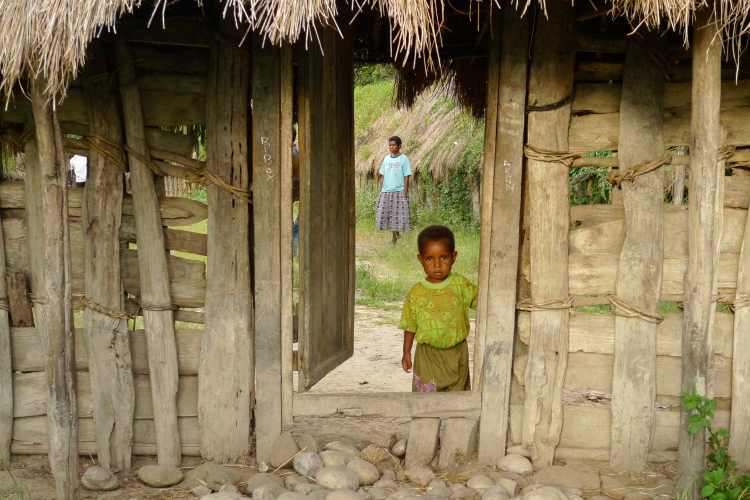
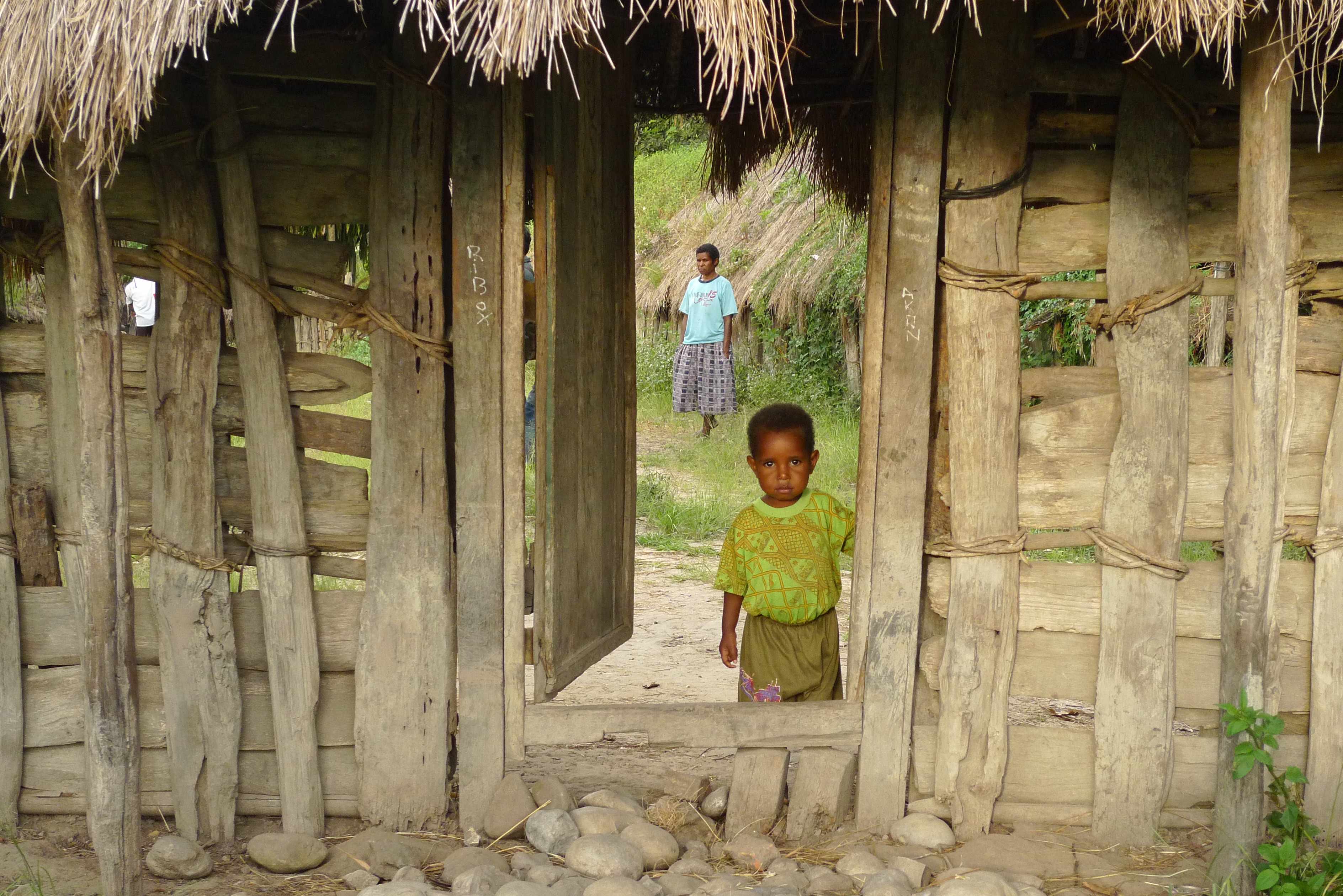
A little boy looks out from the gate of his house in Jiwika, Jayawijaya Papua. Photo by Prodita Sabarini

I’ve always wanted to go to Papua, ever since I read an opinion piece in The Guardian by exile Papuan independence leader Benny Wenda two years ago. It’s such a faraway place from where I grew up and the tales that have been told to me is also so far from the reality there. When I finally set my foot to Papua, the land that people call a piece of heaven on Earth, I was mesmerized by its beauty. The layers and layers of undulating hills and valleys covered in mist was like out of this world. But, it’s a sad place too, the people witness and suffers from violence from the military and injustice from the Indonesian government. I’m Indonesian, Javanese, but when I traveled to Papua, I question the insistence of the government for a unified Indonesia, when it takes away the right to self-determination of peoples. How come an imaginary line be so important as to keep people in chains? Going to Papua, I felt like traveling to time and space, to Java in Colonial times, when all the people despised the Dutch Colonial power and yearned for freedom. But then, it all makes sense why they want to keep that imaginary line, to be able to take away what they wouldn’t be able to take if the line disappears.

Click here for the links

https://proditasabarini.com/2013/04/11/papua-series-papuas-politics-a-case-of-homo-homini-lupus/

https://proditasabarini.com/2013/04/11/papua-series-traditional-voting-system-may-create-conflict-customary-leaders/

https://proditasabarini.com/2013/04/11/papua-series-collective-grief-leads-to-dream-of-freedom/