First Impressions

It’s been three weeks since I left the smog filled Jakarta. I am staying in the quaint New England city of Cambridge, but I first landed in Washington, D.C.

As I step into America’s capital, at once felt a sense of gravity in the city. As a journalist, I try to not be easily swayed by prominence. Famous people are nothing more than human beings; famous things are nothing more than objects, I often say to myself. I take pictures of people I interview, but very rarely — I think I can count only two or three occasions — where I take pictures with them, however famous they are. But, as I walked past the White House, with the American flag flapping on a pole on the roof, a sign that Barack Obama is in the house, I have to admit, I felt excited to be in the same city as he was. I couldn’t resist; I took a picture of myself in front of the White House.

It must be the foreign factor. The White House and the American president are more exotic for me than the Presidential Palace in Indonesia and Susilo Bambang Yudhoyono. Though Indonesians love to believe that Obama is one of us (he likes sate and bakso) given his three-years of living in a Jakarta neighborhood in the late 60s and his mother’s Stanley Ann Dunham’s work there, in the end he is still the president of a superpower that often believes that international law need not apply. The sheer amount of power the U.S. President holds in the international arena is beyond any other head of States in the world. I would be dead-inside if I was not a bit affected by the fact I am in the capital city of United States of America.

Now I am in Cambridge, just next door to Boston, the old historical city where the American Revolution started. I sit in classes in MIT and Harvard, trying to get my head around politics of religion and finding the best method for my research. A writing class with star writer Ta-Nehisi Coates has felt like an indulgence. Reading and analyzing essays in class is like being in one of my favorite podcast, The New Yorker fiction podcast. Although the subject matter is non-fiction rather than fiction, the way Ta-Nehisi helps the class dissect the essays feel similar to what Deborah Treisman and whoever writer is on the show that month.

But the most eye-opening is walking down the streets, exploring the neighborhood and seeing the difference of one street to another. There is a change in style and color of people walking down Main Street that leads to MIT and Windsor Street that leads to the housing projects. Massachusetts Avenue is more “cosmopolitan” with people dressing nicely to go to the pub called Middle East walking side by side with people asking for small change.

Once in a Saturday mid September, a Caribbean Carnival was in full force. The thumping of percussion, accompanies girls dancing in skimpy glittery costumes. The smell of barbecue in the air enticed those who are not even hungry. I hear a foreign language here and there, and an accent, probably Caribbean, among the crowd. Far in the corner are heavy set police officers who seem oblivious to the joy of the carnival. Arms folded, legs spread. The disconnect between people of one city can be seen on the long faces on the pale white cops watching over the joy and laughter of black Americans.
Here and there

I am in The United States of America. I’ve never been here before, but things are familiar. The way people talk. I’ve heard of those sounds before. The way the trees line up in front of the houses. I’ve seen this before. America’s reach in their cultural products is so deep. I felt like I’ve known America before I even set foot on it.

But being here still surprises me. It was not the extreme difference from Indonesia that amazed me. The wide pedestrian paths and the comfort of walking in the comfort of a city in a developed world are pleasant, but expected. I felt a bit giddy walking past the White House and saw the flag which means Obama was in the house. And sitting in an office in MIT, home of the world’s superb minds I never imagined I ever would have a chance to be part of is quite a lot to take in. But, there is something else that has blown my mind in my first week in America so far.

It is the diversity of the people in America and that in that wide spectrum I found something similar to home. The first person I met here was a religious fundamentalist.

“Indonesia has a lot of Muslims, don’t they?”

“Yes, we do”

“Are you a Muslim”

“I was born and raised as one”

“Oh, me too!”

As he spoke of the absurdity of the Trinity, how offensive the push for gay-marriage was for religious people here, I started to find the strangeness of my situation. I flew more than 10,000 miles. I sat on a plane for nearly 2 days and something very similar to home greets me. Every argument he proposed to show how great the religion is are very familiar to me. It’s a small world after all.

I came to MIT courtesy of the International Women’s Media Foundation to find out what turns people’s fear into violence. This is in relation to the growing incidents of religious intolerance and violence in Indonesia. Islamic militancy is growing in Indonesia. An interesting research done by an Indonesian Islamic scholar Achmad Munjid notes that a new generation of educated Indonesian are anxious to be better Muslims than their parents, who were nominal Muslims and practice syncretism.

The man, he too, wanted to be a better Muslim than his parents. For that he actively looked for sources, imams and mosques and formed his way of thinking of this world.

I guess, in the end, I really shouldn’t be surprised by it. America has a growing Muslim community and surely some children of Muslim parents search for an identity that defines them.

Everyone is looking for some kind of salvation and it’s the same from Indonesia to America. The problem is some people strongly believe that their values are superior to others and that’s also similar from Indonesia to America.

A note of thanks to The Jakarta Post newsroom

I remember the first day I stepped into The Jakarta Post. 23. Fresh from my undergrad. I was not the person I am now. For starters, I was somewhat religious. There was a panel – then Chief Editor Endy Bayuni, then managing editor Ati Nurbaiti, senior editor Harry Bhaskara – interviewing me for a position as cub reporter. They wanted to know whether or not I could fit in the hectic newsroom atmosphere. “How do you deal with pressure?” Pak Harry asked. I told him that the funny thing about pressure and hardship is that it makes one become more religious than usual. “I usually just pray a lot,” I said.

The question was repeated again.  Were they looking for another answer? I added that I control my breathing and I pray. I guess, I answered the other questions better than this one because I got the job.

On Friday, I sat in Riyadi Suparno’s office to say good-bye as I resign from The Post, the newspaper that have become my “second home” for the last eight years. Riyadi is now CEO of The Post. When I entered eight years ago, he was still managing editor. “Nobody comes out of The Post the same person,” he said. “True, I rarely pray these days,” I said.

The Post didn’t turn me into a heathen. Don’t get me wrong. But, it did – with its liberal and open atmosphere – given me the courage to question things I dared not to before.  How could you not? You were lumped in a newsroom filled with a wide spectrum of people, from devout religious reporters and editors, former priests-to-be, nominal Muslims, and non-believing editors and sub-editors, working to produce a newspaper whose vision was to promote a civil and humane society. Whatever values one brought to that newsroom would be exposed to different ones. The journey to self-discovery is a never-ending one as long as it has begun. The Post made it possible for me to start.

Working for The Post has also made me a better reporter and writer. At the same time, several years writing for the newspaper humbled me of the enormity of the task. On my first year at The Post, chief editor Meidyatama Suryodiningrat, then still managing editor, told me that I would get the hang of writing five years along the line. “That’s an awful lot of time” I thought. But now, having passed the five-year mark, I still struggle and have a lot of work to do, and I’m thinking Dymas, the chief’s nickname, might have been going easy on me.

Admittedly, the newspaper is not without flaws. I have my share of faults in contributing to the “correction” box. Annoying typo can be seen once in awhile. And I have met readers who complain about our reporting. But all in all, in terms of the newspaper’s commitment to its vision, I think the stories it publishes speak for itself.

I entered The Jakarta Post bright-eyed and nervous, slogged through my initial years stressed out, found the topic I’m most interested in and started to enjoy the day-to-day of reporting and writing.

I go with a heavy heart.

I am leaving not because of any conflict or a better offer. I am starting The Elizabeth Neuffer Fellowship this September, making me relocate to the U.S. for more than half a year. But, the fellowship is more of a momentum rather than a reason to leave. Along the years, The Post has not only become a home to me but a comfort zone.

I am bright-eyed and nervous once more. Scared, really. But, if there’s one thing working with The Post taught me is to have courage. Thank you. Wish me luck.

Embarking on a new journey of learning – Elizabeth Neuffer Fellowship

I will be spending time in the United States during the fall and winter as International Women’s Media Foundation (IWMF)’s 2013-2014 Elizabeth Neuffer fellow. I plan to research on the phenomenon of increasing religious intolerance and violence in Indonesia at the MIT’s Center for International Studies.

There are burning questions that I’m sure a lot of us who are sickened by the endless news about religious violence would like to find answers to. What are people so afraid of? Why do people feel threatened by those who are different? Is it important to differentiate between the sacred and profane? How do political and economical factors play in acts of religious intolerance and violence?

I will also have the opportunity to intern at The Boston Globe and The New York Times.

The fellowship will start in September and I will be posting thoughts about the experience here. In the mean time before my departure I will be posting my reports for The Jakarta Post.

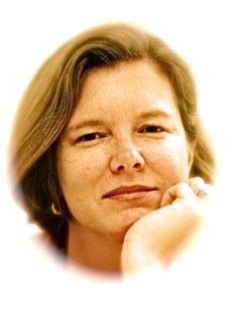
The fellowship is named after Elizabeth Neuffer, The Boston Globe reporter and winner of the 1998 IWMF Courage in Journalism Award. Neuffer who reported on human rights and social justice issues was killed on assignment in Iraq in 2003.

Elizabeth Neuffer - IWMF
Elizabeth Neuffer – IWMF

Sampang revisited – where’s compassion?

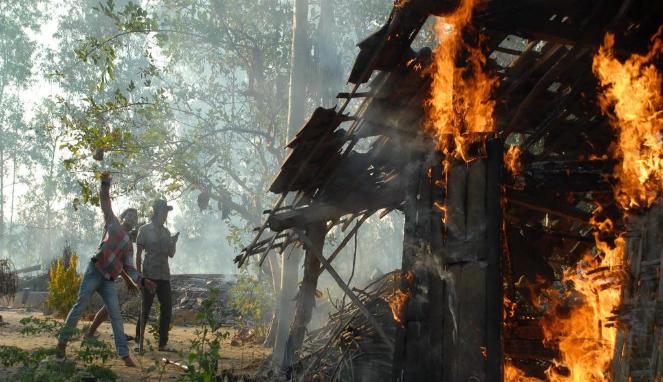
Nearly seven  months ago, I went to Sampang, a small town in Madura Island off the northeastern tip of Java. Around 200 Shiites were taking refuge in a indoor tennis court. Their houses razed to the ground by an angry Sunni mob. I went there and talked to the people: the stories can be read here, here and here.

I’ve worked on different stories since and however disheartening what happened in Sampang, it slowly slipped my mind. Until a few days ago, I thought of them, and wondered about how they were doing. When I was there, the Sampang regent was adamant that he would not let them return to their houses, even though they were forcibly displaced by religious vigilantes. Has he changed his mind?

Apparently not. Andy Irfan, from East Java Commision of Missing Persons and Victims of Violence (Kontras) said they were still in the same tennis indoor court.

Worse still as their fate is in limbo, the court ruled the only person the police arrested over the attack as not guilty. No one from the thousand of people who burned down people’s houses is held accountable.

Madura is famous for the many Islamic boarding schools in the island. They call it the land of ulemas. But, why is there no compassion and justice in that island?

*Human Rights Watch released last month a report on religious intolerance and violence. See HRW’s report here and the government’s response here.