‘There have been efforts to move to an independent Asia’
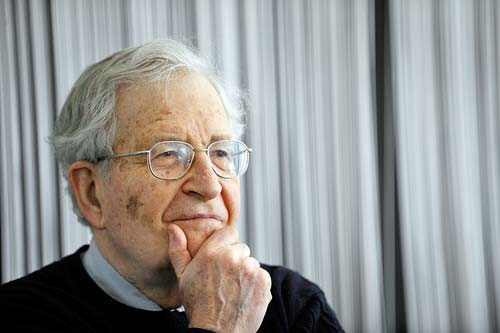

Noam Chomsky, the world-renowned linguist and philosopher, was a vocal advocate for formerly occupied East Timor (now Timor Leste) and continues to be a proponent of the Papuan struggle for self-determination. He spoke recently with The Jakarta Post’s contributor Prodita Sabarini in his office at the Massachusetts Institute of Technology (MIT) in Cambridge, US, on the impact of US foreign policy on Indonesia and how Southeast-Asian countries should be more independent.
Question: What do you think are the main factors enabling impunity on cases of abuses such as in the 1965 communist killings, the war crimes in East Timor and continuing human rights violations in Papua?
Answer: There’s a very simple reason for it. The US supported it all, every one of them. The US was ecstatic in 1965. In fact, the support was so overwhelming that it was just public. The New York Times and other journals were euphoric about it. They didn’t suppress it. They described the massacre as wonderful. Same in Britain. Same in Australia.
What happened in East Timor was because the US and its allies supported it for 25 years. West Papua is the same. As long as the US primarily and its allies as well — the Western powers — support atrocities, they are carried out with impunity, just like their own atrocities are. I mean, the Vietnam War was the worst atrocity in the post-World War II period but nobody’s [found] guilty for it.
Indonesia’s election is just around the corner. How do you see the potential shift from the desire for more political freedom to a return to the old powers in Indonesia?
Same as everywhere else, the powerful win. I mean the overthrow of the dictatorship in Indonesia was important. Part of the reason [for the overthrow] was Soeharto not carrying out roles that the IMF [International Monetary Fund] and the US demanded. And in fact, Madeline Albright, the [then] secretary of state at one point said that the US was dissatisfied with what Indonesia was doing and they ought to think about real change. About four hours later, Soeharto resigned. I don’t know if there was a causal connection but it was awfully suggestive. It is the great powers who decide. Mainly, the US in recent years decides what happens.
What can citizens do to guide where their country’s heading, given these external forces?
Well it’s not hopeless. In fact there are changes. Striking ones. Take Latin America. Ever since the beginning, for 500 years Latin America has been under control of Western imperial power. But now, South America is pretty much liberated. Just in the last 10 years, the changes are enormous.
When the spying scandal broke, Brazil was by far the most outspoken opponent. And in general, Latin America has witnessed a stark change. They’ve pretty much freed themselves, not totally, but largely from imperial control.
There’s recently a study of rendition of which country cooperated: all of Europe — Sweden, France, England, Ireland — Canada and the Middle East of course because that’s where they send them for torture; and Asia mostly cooperated.
One region refused to cooperate: Latin America. And if you think, Latin America not long ago was just the backyard, they did whatever they were told. That’s a pretty astonishing change. I think that should be kind of a model for what could be achieved.
So it’s not hopeless. Latin America was the last place one would have expected to find real independence, given its history, and now it’s maybe the most independent area in the world.
Do you think Indonesia should look into the experiences of Latin America?
You can’t carry over the model. Latin America doesn’t have security problems. Outside of the US there’s no real threat to Latin America. Indonesia does. China’s there. All countries in Southeast Asia have to be concerned with Chinese power.
What do you think of the role of ASEAN is in terms of resisting China’s power?
My feeling is that there have been efforts to move to an independent, non-Chinese Asian system. Like Asian Development Bank for an example. Most have been blocked by the US in the past.
There was a Japanese-based effort to form a kind of Asian Development Bank, but the US undercut it. They want the World Bank, which is US-run, to handle it. But those things can be done and it has to be done in a way which doesn’t form a part of an alliance against China. I don’t think it’s impossible for Southeast and East Asia to become a sort of independent bloc in world affairs, separate from China, separate from the United States.
They’re not doing it now. They’re becoming part of the US system but that’s not good for anyone. That could lead to major serious confrontations.
The US is now strengthening their relationship with Asia.
Pivot to Asia. Well, unfortunately it’s being done in a way which is really threatening to China. I mean, China is not a nice government. They’re not going to be nice to people, but they do have their problems. They’re surrounded and contained.
Take a look at the conflicts between the US and China now. The conflicts are mostly over the seas near the China coast. The US wants to have free rights to send military vessels into those waters and China wants to control those waters. So that’s a confrontation.
There’s no confrontation over the Caribbean or over the waters near California. That would be inconceivable. That tells you about the balance of power.
China is encircled. There’s a ring of military bases from Japan, South Korea, Australia. These are hostile bases and they just surround China. In fact that’s one of the reasons why China is moving to Central Asia where they don’t have these barriers.
If East Asia and Southeast Asia move toward more independence in world affairs, they have to be careful not to be just part of a ring of military containment around China, preventing it from exercising pretty legitimate rights to have free access to its own maritime [sources] in the area.
The Jakarta Post | World | Wed, March 19 2014, 11:31 AM
 Noam Chomsky: Bloomberg
 Prodita Sabarini