Yang lekat dalam ingatan saya mengenai film “The Unknown Known” adalah senyum Rumsfeld dan gaya bercandanya yang jenaka. Ia tampak seperti seorang manusia yang tak memiliki masalah dalam hidup. Morris bercanda menyebut Rumsfeld sebagai seorang Yahudi yang paling tidak Yahudi. “Tidak ada rasa muak pada diri sendiri. Tidak ada kebencian pada diri sendiri. Tidak ada keraguan akan diri sendiri Ia sangat berbeda dari saya.” Ia juga menyebut Rumsfeld sebagai seseorang dengan Sindrom Kekurangan Ironi (Irony Deficit Disorder).
The good news came a few months ago when villagers in Sampang, Madura, who were caught in a deadly faith feud last year reconciled with their Shiite neighbors and invited them to return to their village.
On Sept. 12, dozens of villagers from Blu’uran and Karang Gayam, Sampang, signed a peace pact stating they were “ready to live side by side, respect and love each other as taught by our esteemed Prophet Muhammad”.
The peace pact flies against the claims of political elites who refuse to let the Shiites return to their land under the pretext that the local community will not accept them and that their return would create new violent conflicts. They were driven from their homes in Sampang after a Sunni mob attacked them and burned down their houses in August 2012. From the local regent to the religious affairs minister, all claim that unless the Shiites share the same beliefs as the rest of the community, deadly violence will occur.
Despite the peace pact, many remain wary. That the people of the villages are fed up with the animosity, want to end the conflict and want to live in peace is heartwarming, but is it enough to solve displacement and discrimination against the Shia community?
The answer is no. Even when people of Blu’uran and Karang Gayam, including those who participated in the attack, extended an unconditional invitation to the Shiites to return to their homes, the Religious Affairs Ministry continued to place prerequisites on the Shiites to be able to return home.
Recently, Religious Affairs Minister Suryadharma Ali, who views the solution as conversion — though
his choice of wording is “enlightenment” — reportedly requested the Shiites to agree to stay in the haj dormitory for “reeducation” (pembinaan) before returning to their homes. Why the Shiites, who are only practicing their right to their beliefs, should be reeducated instead of those who set houses on fire, explains the nature of those flames.
There is something more to this Shia persecution than a group of villagers being intolerant toward their neighbors with different beliefs. The dubious reasoning of political elites to sacrifice victims of violence to prevent violence tells of something menacing within the system.
The portrayal of local animosity toward Shiites is merely an excuse for an abuse of power by certain political elites who are part of mainstream Sunni Islam to impose their beliefs.
Consider the events leading up to the attack on Aug. 26. Starting from 2004, religious cleric Ali Kharar started to give sermons with warnings against the “defiant” Shia teachings being spread by Tajul Muluk. Following Ali’s request, Sampang administrative leaders along with local clerics pressured Tajul to “repent” and embrace Sunni teachings.
In 2006, hundreds of people intimidated Tajul and his followers into returning to Sunni teachings. In 2011, the leaders ordered Tajul to move from Sampang to Malang.
After his house was attacked in 2011 by a mob, he was taken to court for blasphemy and was sentenced to two years in prison.
Even before the Aug. 26 attack against the Shiites, the local religious and political establishments in Sampang were systematically pressuring the Shiites to renounce their faith for Sunni teachings.
After the attack, which is plausibly the result of the demagoguery of hard-line clerics, the state ignored the Shiites’ wish to return home and instead has taken their land in exchange for allegiance to Sunni teachings. The only members of the Shiite community that have returned to their villages are those who have signed a pledge in front of the local authorities to condemn Tajul’s teachings and to return to “the true teaching of Islam”.
The peace pact between the Sunni representatives and Shiites should signal that the people can and are willing to live among neighbors with different beliefs. But in a regime that promotes bigotry, this gesture toward tolerance and peace could almost mean nothing.
A peace pact signed by the very people the political elites say are hostile toward the Shiites would not suffice to end the persecution, precisely because the state, with its deep entanglement with the Sunni religious establishment, is the intolerance force. And this condition extends to not only the persecution of Shiites, but also the Ahmadis, the Christians and non-believers.
There is a paradox of arrogance and insecurity in religious intolerance. Those who practice intolerance claim to hold the monopoly on truth and believe they have the authority to pass judgments on who are “defiant” or “misguided”. On the other hand, they feel threatened by these “lesser” beliefs so much so that they feel the need to silence, contain and even eliminate them.
The minister’s “enlightenment” project is an insult to the Shiites. It is disrespectful and is a violation of their freedom of thought, conscience and religion, freedoms clearly guaranteed by our Constitution. The idea that the Shiites (or followers of Tajul Muluk, the misguided, the deviants) need to be “reeducated” is uncomfortably and dangerously similar to justifications of many history’s violent conquests to “civilize” the savages.
The damage done by intolerant religious elements hijacking the state apparatus is clearly felt by those being persecuted. But it does not stop there. In every persecution of religious minorities in this
country, those actively impinging other’s rights to religious freedom are creating an arrogant and insecure image of Sunni Islam. Bullying people into submitting to “the true teaching of Islam” is not in line with the image of a peaceful and loving religion they champion.
Hopefully, the next time they open the Koran they will come across the verse that came when the Prophet Muhammad and his followers were the ones being persecuted in Mecca: For you is your faith, and for me, my faith.
Prodita Sabarini, Cambridge | Opinion | Tue, November 19 2013
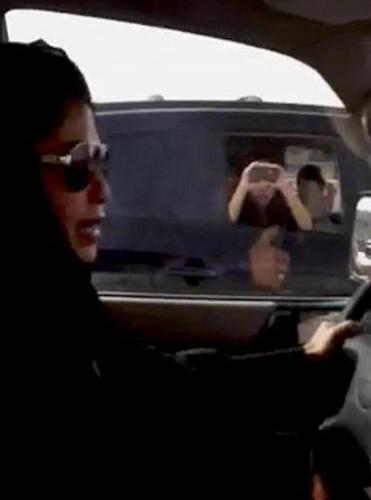
Associated Press/Saudi Women for Driving via Change.org/Eman Al-Nafjan The passenger of a passing vehicle looks across as a woman drives her car in defiance of Saudi Arabia’s ban on women driving, in Riyadh, Saudi Arabia, 2011, in this video frame grab from the Saudi Women for Driving coalition.
Women behind the wheel have the potential to change Saudi society
What hope is left for the Arab Spring? Egypt is returning to military dictatorship. Syria is a bloodbath, spiraling into a deeper and more violent civil war. Yet some remnant of idealism remains — on the roads and highways of Saudia Arabia.
In 2011, inspired by the revolutions in neighboring Gulf States, Saudi women started their own movement. Silenced and hidden in a virtual gender apartheid, they revolted by cunningly tackling a seemingly mundane issue — the right to drive a car.
While some protests in the region faltered as they descended into factionalism and civil war, the women’s movement in Saudi Arabia continues to throttle ahead. Like similar protests in 2011 and 2012, this Saturday is being promoted as a day of defiance behind the wheel.
More than 16,000 people have signed a petition demanding the government provide means for women to obtain driver’s licenses. There is no official law that prohibits women from driving, but women cannot obtain driving licenses from local authorities. In some ways, this paradox reflects the depth of the women’s challenge, the deep roots of the cultural norms they are challenging. But in doing so, they may liberate some men, as well.
In Saudi Arabia, neither men nor women have political rights. Learning from the 1979 Iranian revolution, in which the religious establishment managed to mobilize a people’s revolt against the shah, the Saudi royal family has made sure to appease the country’s clerics by implementing strict Islamic codes. Unfortunately, in the patriarchal society, stricter religious codes have been interpreted as justification to undermine women’s rights.
Under a system of male guardianship, women are forced to be dependent on men. To travel, study, marry, or even receive medical treatment, they must obtain permission from their fathers, husbands, or sons. Women received the right to work without a guardian’s permission only as recently as 2011.
It was once enough to tell women that to be virtuous is to be obedient. But in recent years, as women’s level of education has risen, it has become harder for the religious establishment to keep women down. There are more women with higher-education degrees than men, according to 2011 data from Saudi Ministry of Higher Education ministry, but the women make up less than 15 percent of the workforce. Lacking the right to drive, those women who do have jobs must rely on male relatives to take them to work or spend between 30 to 60 percent of their salaries to hire drivers.
Manal al-Sharif, who became the face of the women’s movement after being jailed for driving in 2011, said that Saudi women’s awakening, signaled by their determination to gain access to the driver’s seat, has the potential to change the whole Saudi society. Saudi men have posted supportive messages on social media. On YouTube, one can see men giving the thumbs up when seeing women driving. A Saudi man said to Sharif: “In Saudi, to get your rights you need to be a woman, because women know how to fight for their rights.”
Focusing on driving as a symbol for a fight against larger injustices has been a smart move by the activists. First, they have the advantage that no explicit law bans women from driving, thereby giving them more space to make their protest. They aim to hit the male guardianship system, but to choose their battles strategically. (Had they protested against the guardianship directly they would have faced a steep wall of resistance.) Second, the issue strikes an immediate chord with American women, giving them an instant source of sisterhood and support.
The movement has seen other signs of progress. No longer do clerics cite religious law to justify the driving ban, Sharif has observed. Instead, they rely on much-ridiculed scientific claims that driving can be damaging to a woman’s reproductive organs. Meanwhile, women are now allowed to ride bicycles, albeit for recreational purposes only. Two female athletes competed in the 2012 London Olympics. King Abdullah has appointed 30 women to the Majlis al-Shura, a council whose 150 members advise him on matters of public policy. Some women councilors have since supported activists’ demand to lift the ban on driving. And in 2015, women will be able to vote and run in municipal elections.
There has been no revolution in Saudi Arabia. But the persistence and cunning of the Saudi women’s movement has breathed life into the concept of the “Arab Spring” as a source of peaceful awakening. And the key to its success has been behind the wheel.
Prodita Sabarini, an Indonesian journalist, is the 2013-14 International Women’s Media Foundation Elizabeth Neuffer fellow.
War photographer: Syrian Nour Kelze knows that she can die anytime. (Courtesy IWMF/Matthew VanDyke)
Photojournalist Nour Kelze knows that she can die anytime. The 25-year-old says that she accepts that risk to show the world the horrors that have been happening in her home country of Syria.
“This is something I have to do, Kelze said in a video message shown in New York recently. “I mean so many people, so many girls, died in the kitchen. Like doing a dishwash or something and they have like a morsel or a shrapnel coming through the window and drop dead. So what’s the point? Why should I die cheap?”
On Oct. 23, the International Women’s Media Foundation (IWMF), a Washington-based organization that aims to strengthen women’s role in journalism, honored Kelze, Afghanistani media director Najiba Ayubi and Cambodian editor Bopha Phorn at the 2013 Courage in Journalism Awards for their bravery and determination in reporting.
The IWMF also presented a lifetime achievement award to Edna Machirori, Zimbabwe’s first black woman editor.
While Machirori, Ayubi, and Phorn all flew to New York to accept the awards, Kelze was unable to join. The ceremony and luncheon, attended by nearly 500 prominent US news personalities, also aimed to raise US$100,000 for an emergency fund for women journalists reporting in dangerous areas.
The risks that women such as Kelze face are formidable: The Committee to Protect Journalists (CPJ) has ranked Syria as the most dangerous place for journalists in the world.
Despite the risks, Kelze made the transition from elementary school teacher to photojournalist last year as her country continued to spiral into conflict.
At first, Kelze worked independently, taking pictures of rebel fighters using her cell phone. A veteran war photographer for Reuters, Goran Tomasevic, noticed her talent and gut, giving her his camera equipment and training her.
Before long, Kelze’s pictures bagan to appear on the pages of newspapers around the world.
Kelze has escaped many near death experiences. Soldiers from a small aircraft fired at her when she was taking pictures of the aftermath of a missile attack in a residential area in Aleppo.
In February, she broke her ankle after a wall fell on top of her as snipers shot at rebel fighters.
She went to Turkey for an operation and was back in the field reporting four days later.
In Kelze’s acceptance letter, she acknowledged the courage of the Syrian people.
“I know deep in my heart there are many people who deserve this award more than I do. Syrians showed a lot of endurance and patience and courage through this crisis,” Kelze wrote.
“This award is for Syria — for standing strong still after all the hardships since the past till the present day and even in the future. Syria will survive […] let the whole world know. We will survive.”
While those at the awards ceremony could only glimpse Kelze’s world through a powerful video documentary by Matthew VanDyke; Najiba Ayubi, Phorn and Machirori all took the stage and gave speeches.
Following the ceremony, Ayubi could not hold back tears when remembering 11 of her colleagues who have died, saying that the acknowledgment of her work was bittersweet, considering the memory of the friends who could not be with her.
Ayubi, who is the managing director of the Killid Group, a public media NGO in Afghanistan, had been criticized by state-run media for questioning the lack of independent media in the nation.
Fearless: Bopha Phorn from Cambodia escaped death when gathering information about illegal logging in the jungle. She scribbled the phone number of her editor on her stomach in case people found her body. (Courtesy IWMF/Simon Marks)
Gunmen knocked on her door after she reported on a scandal involving parliament members and the secret police have told her to “be careful” because someone might be after her.
She said that those challenges were “sweet” to her. “Journalism is not my job. It is my life,” Ayubi said in her acceptance speech.
The 28-year-old Phorn has shown a similar passion for journalism, saying that it was like breathing for her. Last year, Phorn escaped death when gathering information about illegal logging in the Cambodian jungle. Environmentalist Chut Wutty was shot and killed by soldiers in uniform, while Phorn and another reporter survived.
Phorn said that she thought she was about to die, and scribbled the telephone number of her editor on her stomach, just in case people found her body.
Despite having nearly being killed while reporting, Phorn said that she became more determined in her work.
For Machirori, who has been a journalist for 50 years, receiving the Lifetime Achievement Award was “the climax of her life”.
She was the first black female editor in Zimbabwe, considered one of the most dangerous countries for journalists.
She said that it was not easy for a woman to be a journalist in Zimbabwe’s patriarchal society. “Women must be seen but not heard.”
“Powerful people in my country dislike being taken to task and be held accountable by male journalists, but they regard this as an attack against their personal honor and a mortal blow to their egos to have a mere woman do the same,” Machirori said in her acceptance speech.
Machirori has mentored young women to become professional reporters able to navigate discrimination and sexual harassment. Her daughter Fungai has followed her footsteps.
IWMF program director Nadine Hoffman said that the awards honored the work of women journalists working in dangerous areas and hoped to increase the international profiles of these women to better protect them.
In the last 25 years, the Courage in Journalism Award has been given to more than 100 women from around the world. Some have been killed or imprisoned, while others have benefitted from the network provided by the IWMF, from medical assistance to pro-bono legal assistance to temporary housing.
Previous recipients of the Courage Awards include Indonesian journalist Bina Bektiati in 1997; Russian journalist Anna Politkovskaya in 2002, who was gunned down in her apartment in 2006; and British journalist Marie Colvin in 2000, who died while covering the war in Syria in 2012.
The writer, a former journalist for The Jakarta Post, received IWMF’s Neuffer fellowship.
Prodita Sabarini, Contributor, New York | Feature | Thu, October 31 201
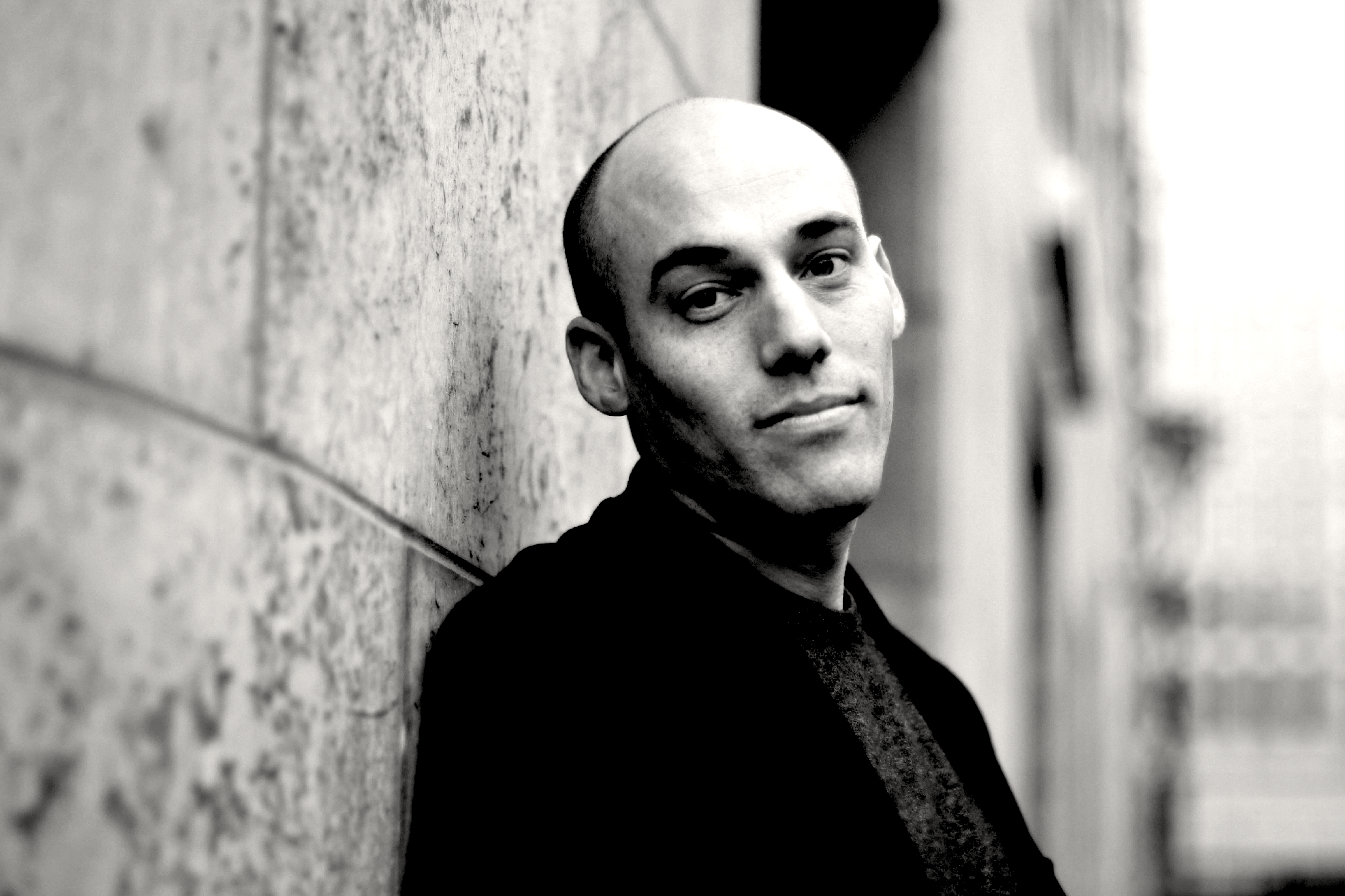
Joshua Oppenheimer/Photo by Oliver Clasper. Courtesy of Drafthouse Films
I recently interviewed Joshua Oppenheimer via skype before the screening of “The Act of Killing” in Harvard today. It was a fascinating interview. The Boston Globe published a condensed and edited version of the interview. But, here is the extended interview, which is some 6,000 words.
Here you’ll find his theory of how society enters into a moral downward spiral in total impunity.
Q: How do you think the free access to digital download will influence the discussion about the anti-communist purge in Indonesia?
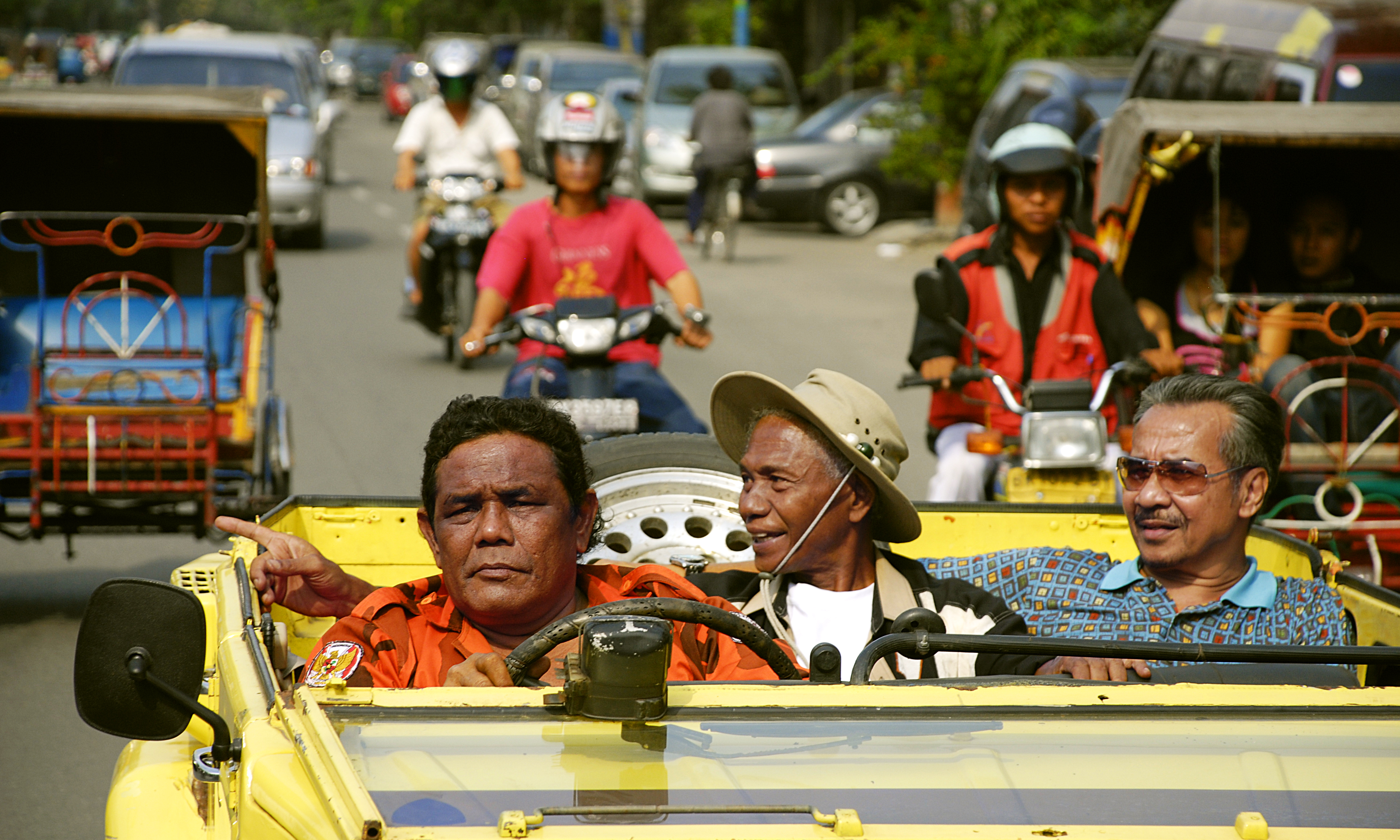
A: Our intention is the film reaches as wide Indonesian public as possible. Indonesia bans film on human rights violations committed by the government of Indonesia and we knew that if we simply release the film in Indonesia commercially in cinemas we first have to give it to the Badan Sensor Film (The Film Censorship Body) and they would likely ban the film. So we knew if they ban the film it would become a crime to show the film at all and that in turn can be used as an excuse by the government or it can be used as an excuse by the paramilitary movement Pancasila Youth or by the army or by similar paramilitary movement to physically attack screenings and that would make it difficult to show the film in Indonesia because people would be afraid to hold screenings. So we didn’t want that to happen, so we knew we have to build up very serious high level support for the film in Indonesia before we can really start screening. So all last autumn we held screenings in Komnas Ham (Indonesia National Human Rights Commission, ed) in Jakarta for Indonesia’s leading journalists, filmmakers, even celebrities, writers, artists, educators and so forth, human rights advocates, and we can say that everyone was very moved by the film. Komnas HAM loved the film and felt that everybody in Indonesia should see this film. And the journalists, in particular the staff of Tempo Magazine felt that there was a time before “The Act of Killing” and there was a time after “The Act of Killing” and they could no longer remain silent about the scale of what happened in 1965. The fact that the corruption and impunity and abuse that you see in the film are systemic and “The Act of Killing” is a repeatable experiment, so they felt it was time for them to break essentially the 47 years of silence about the killings. To do so they wanted to marshal fresh evidence about the killings. So they sent, I think it was 47 journalist plus editorial staff and support staff around 15 people to go around the country even to areas where they didn’t know if the killings had taken place and gathered and try to meet men like Anwar, meet men like the perpetrators I filmed to show that the film was a repeatable experiment, to show that Anwar was just one man among 40,000 people. They came back with hundreds of hundreds of pages of boastful testimonies by perpetrators in just a few weeks and edited it down and came up with a special double edition of Tempo. And then there’s an extensive coverage of the film as well and the rest of the media started to break their silence little by little about the killings and all the people who saw the film then started to hold screenings. They said, “OK first step was to go back to our communities and networks and hold screenings”. And on 10th of December of International Human Rights Day last year, we held 50 screening in 30 screenings ranging from 600 to700 people and that grew as of April to 500 screenings in 95 cities and then we lost count.
The point is the film should spark a discussion. We didn’t want people to just watch it at home alone we wanted people watching it together and having these debates together and once we felt really well underway, we felt we can look to make the film available online. So, one of the things that happened that happened between December and now, the screenings have been more and more public and more and more interesting. We had a screening in a mass grave in Central Java where the relatives of the victims who were killed there were too afraid to go untuk ziarah (to visit the grave, ed) at the end of Ramadan because the anti-communist- sort of the veterans of the anti-communist militias would threatened “You can’t come here!” They were too intimidated to go and visit the grave, so one organizer held a screening at this mass grave for the survivors and for the children of perpetrators, that now they have allowed both sides to visit the grave and pray at the grave.
Those screenings happened. That was one amazing screenings. But also the screenings have become more and more public, people started to announcing them on Facebook, announcing them on twitter, putting up posters in university campuses. A couple of screenings have been threatened. A couple of screenings have had Kodim (District Military Comandy, ed) said you can’t do the screening. But by and large the screenings are open and there’s no stopping it now. So now it feels like the time is right to put the film online so that as many people can see it as possible. We knew we have been giving out DVDs for free for the last six month and we knew that it would enter the pirate sphere but we wanted people to be able to see the film for free and not have to pay for it. And the hope is that every Indonesian should see the film
You have mentioned that talking to the perpetrators made you feel like you were in Nazi Germany 40 years after the Holocaust and the Nazi still in power. Can you tell us how you come to feel that way?
Well there were two things that happened. First of all the perpetrators were boasting and the boasting was obviously a sign. It wasn’t necessarily a sign of pride. I’ve come to understand that it’s actually that they’re boasting not necessarily because they’re proud. In fact in the end I think “The Act of Killing” really shows that the boasting is defensive and they’re desperately trying to convince themselves what everybody knows, namely that of course mass killing is wrong and when you killed unarmed defenseless people it’s wrong. Period. The message of the film could be: everybody already knows everything. And I’ll come back to that in a moment.
Two things happened in the early years I when was filming with survivors and perpetrators. First, the perpetrators were boasting and I understood: OK the reason they’re boasting is because they’ve never been removed from power and therefore, they’ve not been forced to admit what they had done was wrong. So therefore they neither deny what they’ve done nor do they apologize for it or act ashamed of it. The second thing I realize was that I understood they could either feel proud of what they’ve done or perhaps as I think the film shows that they’re desperately clinging to the justification that it’s OK, that they don’t have to wake up in the morning, look in the mirror and see mass murderers in the mirror. The other thing that happened was that the survivors that came out. Word got around that we were talking about what happened in 1965 and the survivors were no longer allowed to talk to us. We were arranged to film with somebody. We would come to the house to start filming and within half an hour people from Koramil (the military subdistrict command, ed) would show up and say “sorry you can’t film”. Or people would come from Polda (District Police) and say “you can’t film these people”. And our equipment will be taken and they would pretend that they’re looking at our tapes but they would have nothing on the tapes yet because we haven’t managed to start filming. So the contrast between survivors who were bullied or forced into silence while the perpetrators were boasting about telling stories, which were far more incriminating that anything the survivors could possibly tell, that was what made me feel this is something I’ve never seen before. It’s just like being in Germany 40 years after the Holocaust and finding the Nazi still in power.
But because I started my work in Indonesia filming on a Belgian oil palm plantation on the very brutal conditions by which our palm oil — therefore our margarine and skin cream – were produced. I came to feel this horrible situation is by no means unique and it’s not just this is an amazing case study for a country where there has been total impunity. I recognize that this is how most of the world is organized. That everything we buy, whether we’re from a country in the global south like Indonesia or in United States or wherever, everything we buy is haunted by the suffering of people who make it for us. All of them are working in places like the Indonesia of “The Act of Killing”, places where there’s been mass political violence, places where perpetrators have won and in their victory built regimes of fear that keep everybody who makes everything we buy too afraid to effectively get the human cost of what we buy included in the price tag that we pay. In that sense we all depend on Anwar and his friends for our everyday living. I don’t think we want to, but that’s the world we’ve inherited and the position we’ve inherited. And I think it damages all of us. I’ve said we are guests of Anwar’s cannibalistic feast but I would say more chillingly we are hosts of the cannibalistic feasts. Just as Jusuf Kalla says we need our thugs to do our dirty work and get things done, so too does Anwar and his friends do our dirty work. And it’s maybe dirty work that we wished the world hasn’t done. We wish the world to be organized in a different way where people are not exploited like the H&M T-shirt or the Macbook that I’m speaking to you through, but I think that’s the world that we live in and I think it damages us. I think as Anwar and his friends are damaged from building a normality on mass graves and the suffering of others, we are damaged by depending for our lives from the suffering of others.
Back in 2002-2003, I set out to expose that. The human rights community in Jakarta and also the survivors when they saw the footage I was getting with the very perpetrators I filmed — They saw them boasting in front of their grandchildren, taking me to the places that they killed. And you’ll see that material in my new film, it’s sort of similar to the footage of Anwar on the roof in the beginning where he dances, people were simply taking me to the places that they killed, showing me how they killed and demonstrating it — they say continue filming even if the survivors can’t be filmed. “Keep filming the perpetrators because you’re finding out what happened and when the viewers see them boasting, they’ll see exactly what we’re afraid of and they will glimpse the moral vacuum, the cultural vacuum that is inevitable when you have total impunity for genocide”. So I kept filming, I film every perpetrator I could find across the region up the chain of command to some retired generals in Jakarta, — General Kemal Idris was one and Herman Saren Sudiro was another, both of them have died — retired CIA officers and State Department officers living outside of DC. And everyone was boastful, even the Americans. And the State Department Guy said: “I may have blood on my hands but sometimes that’s a good thing.” He was just providing the list of thousands of names of journalists and educators and union organizers, people who were non-violent, people who were not communists necessarily at all, providing them to the army and say kill these people. For us.
Coming back to the question, this is sort of the space where the Nazi have won. This is not unusual, this is the underbelly of our reality and we all depend on it. And the other day, we had our Finnish premier, and someone say “Josh these things don’t happen in Finland but we have our own historical violence that we’re silent about” and I said, “first of all, no they do happen in Finland. Every time you buy a shirt in H&M it’s happening in Finland. Every time you put petrol in your tank it’s happening in Finland”. There’s of all of that.
And I think what makes Indonesia special, in particular North Sumatra, is the shamelessness of the perpetrators and that of course is a consequence of the fact that unlike the Holocaust the rest of the world was cheering them on while they were killing. During the Holocaust maybe the rest of the world didn’t intervene to stop it but they were opposed to it. Here the world was cheering them on and so, they’ve clung to that celebration so that they can live with what they’ve done ever since. And that is what makes Indonesia unique. Not the violence, not the terror, not the regime of fear. Indonesia is not so much worse than China or anywhere else. In fact I don’t think it’s worse than China. I’ve spent time in China and China is probably the more serious case of them all by far. The shamelessness of the perpetrators in Indonesia is what makes Indonesia such a powerful allegory for everywhere else.
Drafthouse Films
Q: One of the questions about your film is that you interviewed a lot of people including the retired generals and up to the CIA but those people weren’t present in the film. Why was that?
A: The film is not a historical documentary of what happened then. The film is about the consequences of impunity now, the consequences on a group of people and on a whole political culture for building your normality on terror and lies. So if I want to include the story of American involvement, there will be two problems. One is that is by no decisive means we can show, we can demonstrate that America supported this, that America provided weapons and money and cheered and gave encouragement to kill more and more people. We can’t show that this was decisive. America was not the dalang (puppet master) behind this. And the reason for that of course is that America burned a lot of its bridges with the Indonesian army in the late 50s when they supported the PRRI/Permesta rebellions because they were caught red handed tried to break up the country. And Indonesia, although many of the people involved in the Permesta rebellion later returned from exile from Singapore — these are traitors, Suharto called them back. How many people in the Suharto cabinet were actually traitors trying to break up the unified republic of Indonesia and the New Order bangs on about, what is it, the Negara Kesatuan Republik Indonesia. It’s ironic that the actual framers of the discourse were actually traitors caught red handed trying to break up the unified republic of Indonesia but that’s the side story. My point is that the US has burnt its bridges with a lot of the Indonesian army. So they could offer support, they could say, “OK if you really move forward against the communist we will give you lots of aid, if you go against every potential supporter of the communist, the whole Indonesian left, we’ll give you even more aid et cetera. But we can’t show that that’s determinate and so it felt like if you show and tell that story you would be drawn into a historical argument about how significant was that support right. And to do that you’ll inevitable be making a film, a historical documentary about what happened in 1965 and I bet even if I did an excellent job of it no one would care. No one would care, including Indonesians. Because in fact the facts are available online and we can’t even get people to care about what’s going on in Syria right now or Egypt, much less what happened in Indonesia in 1965 at the height of the cold war. It was a decision to make a film about now. And about a regime now, and about corruption now, and the moral vacuum now.
And but therefore, I took a decision to kind of make America a character throughout the whole film, whether it’s American culture or American movies, American fashion. I think that it’s fair to say, the same person who said this wonderful thing, “Your film is about how everybody already knows about everything” is Peter Seller, he’s a friend of mine and a friend of the film. He also said, “Your film Josh is a film by an American”. It’s a film about Indonesia, and it is an Indonesian film about Indonesia, because of its huge Indonesian crew and component but it’s also an American film by an American, and I think it’s so because of the way the U.S. and the U.S. culture is haunting the whole film, also the victims are haunting the whole film. The dead haunt every frame of “The Act of Killing”.
The Human Rights Community in Indonesia said to me, one person said to me very clearly, “Josh we need a film that is an expose but an expose not of the things we don’t know but an expose of things that everybody in Indonesia somehow already knows but has been too afraid to address. We need a film that comes to Indonesia like the child in the ‘Emperor’s New Clothes’, and it points to a reality that everybody knows about but is too afraid to address”. And that’s what the film somehow I think does.
And I think in that sense the film has come to Indonesia a little bit like the child in the “Emperor’s New Clothes” and it will continue to do its work as that opens up a space where people have the courage to talk about the things they can’t talk about before. And it’s done that around the world. The film almost literally holds up a dark mirror to Anwar but it holds up a dark mirror to the whole regime and it holds up a dark mirror to all of us. I’ve been amazed and heartened by the bravery and the courage of viewers all around the world to see themselves in this. This is me. Anwar is me. The society is my society and it’s something of the humanity of the way I approached Anwar.
Q: The film is powerful and disturbing at the same time as it forces the viewers to see Anwar in an intimate setting as a human, which makes viewers confront their own human flaws. Was there a time in the filming process that you stopped seeing Anwar as a human to be able to maintain your own sense of humanity?
A: No, I made a rule to myself that I would never for a second stopped seeing Anwar as a human and that was a painful rule because when you make a film about another human being when you’re not just trying to gather facts and issue a verdict to judge them, you actually have to get very close to the person. When you become close to someone of course you become vulnerable to them and that was painful because then that gave me pretty bad nightmares. And yeah, it gave me nightmares. That gave me intermittent insomnia because I couldn’t sleep because of the nightmares. And I only really got through it because of the support of my crew especially my anonymous co-director and the rest of the crew too. On the contrary when you decide, “OK, I’m going to see this man as inhuman, as a monster to retain my humanity”, the opposite is what happens. If I were to say, “This man has done something monstrous and therefore he’s a monster”, what I would be doing is simply reassuring myself that I’m not like him and I would be closing off two things. I’d be closing off any possibility of understanding how human beings do this to each other, because in fact every act of evil in our history has been committed only by human beings like us. And when people ask: How can you humanize Anwar? The answer is extremely simple. It’s three words: He is human. Period. But I would also be closing off my possibility to empathy in that moment. And empathy is not a zero-sum game. You can’t have too much of it. If I empathize for Anwar it doesn’t mean I have any less empathy for the survivors who I began this project with. On the contrary I think empathy is the beginning of love and you can never have enough of it.
Q:How much has your cultural and family background as descendant of people who escaped the Holocaust influence you in the making of the film?
A: I think it’s probably the source of the large part of my commitment. You know I’ve dedicated a decade to this work and there’ll be another year before I’m done with this because I have another film coming and I think when I had this feeling that I’m now in you know the equivalent of post-Holocaust Germany if the Nazi’s were still in power I understood I have to give this as many years as it take. And I think that way because growing up I very much was taught that the aim of all culture, certainly art, and the aim of all politics certainly and maybe the aim of all culture is to prevent these things from happening again. And not in the limited sense of never again to us but in a human sense of never again to any human being anywhere. And the tragedy of course is these things keep happening again and we have to look at the reality that although there is much that is singular about the Holocaust, every genocide is singular, and we have to look at the reality that human beings keep doing this to each other and we have to look at how human beings do this, why they do it, and the effects of this kind of evil on ourselves on each other on our society on our common humanity.
One of the things that the film I thing that have discovered, you know Anwar is the 41st perpetrators I filmed, but I lingered on him because somehow his pain is closer to the surface, and I saw there, “OK the boasting is not a sign of pride, it’s actually covering guilt”. I saw the whole film a study of the consequences of guilt and living with guilt. And therefore I sort of saw that the film is about Anwar but there’s also this whole layer about the society about the use of preman (thugs, ed) in politics, Pemuda Pancasila (Pancasila Youth), the corrupt politicians and so forth. And I saw the corruption, this sort of moral vacuum of corruption and exploitation is also perhaps a consequence of people maintaining lies that they tell themselves because they don’t want to admit their guilt. So when you have a whole society, a whole regime, committed this huge atrocity, gets away with it, is celebrated for it and rewarded for it by at least one of the superpowers and the whole Western bloc and then they produce excuse for what they’ve done, a lie. And then the perpetrator clings to that lie. That demands a downward spiral into further evil and corruption because now you have to blame the victims and survivors. That’s part of the excuse, “it’s their fault, they deserved it”. You have to de-humanize them because it’s much easier to live with having killed them, for they’re not fully human. You have to stigmatize them. You can steal their land because every time you steal their land or every time you shake them down in the market, every time you extorte them in the market, of course you are reasserting their lack of humanity. And you have to kill again. Because if the army now tells Anwar – kill this group of people – for the same reason he killed the first group, and if he don’t do it the second time, you’re admitting it was wrong the first time. Here, I stand on the shoulders of Pramoedya Ananta Toer’s Rumah Kaca (Glass House) where you see this colonial police inspector, collaborator, who knows what he’s doing is wrong and despairingly throws himself, justifies it to himself. Despairingly, knowingly he has to justify it and throw himself into further violence, further corruption, further evil. We see that corruption in the whole society in “The Act of Killing” and we see it inside of Anwar because we see Anwar recognizes after they burned down Kampung Kolam — they re-enact the attack of Kampung Kolam, he says, “It’s too much this is wrong. It’s the end of the world”. He’s in the jermal, on the fishing platform in the middle of the night, saying it’s “dunia hampir kiamat” (The world is nearing its end) or something and then he throws himself despairingly into finally reliving in that office the sadism of the film’s noir scenes and of course he also, in the section of Pengkhianatan G30S/PKI he says, “I know this was wrong, I know it’s a lie”. They know the film is a lie, but Anwar says it’s the one thing that makes me feel better about myself.
I think the film witnesses that downward spiral and the irony is that the cause of that evil, is not that the perpetrator are immoral evil people but actually that they’re human and they’re moral beings and they know the difference between right and wrong and it’s precisely because they’re moral not immoral that they have to lie to themselves to protect themselves from the terror of guilt.
That’s a really counterintuitive idea but it’s something that I really didn’t understand before I made the film. But you know we have this idea that everyone out there is pretty much good and there are a few people who fuck everything up for the rest of us. But in reality, everybody’s human and we all do bad things and we cover it up and sometimes those stories we tell to justify our actions, how we lie to ourselves to justify our actions, to maintain those stories and those lies lead to this downward spiral. So corruption corrupt absolutely and the first act of corruption is when they first kill.
Sometimes people say to me, “Josh, Anwar must have been really dumb to be in the film to participate in the film”. And actually I don’t feel Anwar feels tricked by the film at all in the end. He and I remain in touch all the time. At the beginning, I didn’t know how to answer that question. But now I have to say no, Anwar wasn’t dumb to be in the film. Anwar was dumb to do the killing in the first place. That was stupid, that’s when he really fucked up.
Q: How did you decide on using a participatory method in documenting the film?
I want to ask that in two ways. First of all, all documentaries are participatory. That in fact it’s a myth that you’re just filming people. That’s a lie that we tell. In reality every documentary shoot is an occasion for people to perform on camera. They’re always aware of the camera. They always try to act normal but it’s still acting or they can use the occasion of being filmed to express, to confess to something, to prolong an argument. If I film you for the day, the biggest event in your day is being filmed by me, it’s no longer your day, and in that sense we can try to get you to quote-on-quote act normal, but that would still be acting. We really create reality anytime we film anybody and it seem arbitrary to create a reality in which we pretend that I’m not there filming. In that sense all documentaries are collaborative and participatory. It’s just whether you want to show that or not. And I think it’s more honest to show it.
And then as I filmed 40 perpetrators before I met Anwar, all of them were inclined to take me to the place where they show me how they killed, boast about how they killed. And I realize they’re not really giving me testimonies. They’re not really going to a sober process of trying to remember. They’re performing. They’re telling me facts, but it’s all oriented towards a spectator. They have a spectator in mind. And the question is: Who is the spectator? Why are they performing. I film a man boasting about killing a man in front of his granddaughter. She looks on bored as though she’s seen this many times before. Ok, I can understand that he boast to his neighbors because he’s afraid of them taking reveng — the survivors. He wants them to be silent and suppressed so he boast to keep them afraid or he boast to keep people afraid so he can wield power as a gangster. But why does he boast to his granddaughter? Surely he doesn’t want his granddaughter to be afraid of him. So I started to wonder for whom are they performing in their normal lives? What is the function of this performing? For whom are they performing? For whom are they boasting? What are the effects of this boasting on the whole society? How did they want to be seen and how do they really see themselves? And I understood that if I let them show me what they’ve done in whatever way they wish, and film the process, I can answer those questions. I can produce a documentary of the imagination instead of a documentary of their everyday lives.
Q: Your film allowed creative participation for your subjects. Where did the idea of reenactments come from?
A: The form of “The Act of Killing” as a film was my idea. And they’re not making another film. But the re-enacting the killings were something they were doing from the moment I met them. In the living room they’d start re-enacting. The first perpetrator I film had a wife. He said, “Oh let me show you how I killed the Gerwani (Women’s wing of the Communist Party) members”, because it was different from the way he killed everyone else. He called his wife in and starts acting it out on her. The next person invites me to this Snake River, sungai ular, and shows me, he and his fellow death-squad member showed how he would drag people to the river and cut off their heads, taking turn playing victim and perpetrator without my asking. I think because they know the films they’ve seen are dramas and maybe they had a notion that they should dramatize. And then they would watch the footage and then they would say, “Oh it’s not good enough”, because it doesn’t look like a movie. And I was thinking, what is going on here? What image are they trying to project? So the re-enactment came from them.
And in “The Act of Killing”, you see these very simple demonstrations, like Anwar does on the roof, evolve into more and more surreal, more and more grotesque re-enactments. And that process happened organically because of the love of American movies because of the days of preman bioskop (cinema thugs). And it happened, as you see in the film, in response to dissatisfaction with the first re-enactments. So the narrative was the same from the whole time. From the beginning, they film something — I mean I film with them — they started re-enacting. They re-enact because that’s what they were doing I didn’t ask them to. Then we’d show that footage back to them, wondering how on earth this is possible and will they recognize the moral meaning of what they have done when they saw the footage in the mirror of the film. And then they would plan what to shoot next. When I met Anwar, he looked very disturbed when I showed that footage back to him, where he’s dancing on the roof that first shoot. I think he’s very disturbed about what he did, but he dares not say it because he’s never been forced to admit it was wrong and to say “this makes me look bad, this is terrible” would be to admit it’s wrong and he’s never been forced to do that. So, he displaces that discomfort on to his clothes, he says “I look like I’m dressed for a picnic and my acting is bad”, and so began this process of more and more surreal embellishment each time he’s trying to run away from the horror that’s evoked by the previous shoot. And in that sense it’s little like the artist painting his own picture. He paints a little, steps back, looks at the canvas chooses what to paint next. We only plan one re-enactment at a time. We’d shoot it. He’d watch it and then we’d plan the next based on his reaction. Of course what’s fueling this process from the very beginning if you think about is his conscience. And in that sense it’s not a surprise in hindsight that the fictional dramatization becomes the prism through which he’d finally confronts the unspeakable of what he’s done.
Q: You interviewed 70 people and used a participatory method, but in the end you as a director had to choose which characters to present to tell their story. What are your considerations in choosing who to present in the film?
A: Well it’s not a casting process. It’s not like I was looking for the right character. I thought I cut a film out of the 40 men that I filmed before I met Anwar, plus Anwar the 41 and it would be a kind of horizontal film with lots of different people, kind of a kaleidoscopic. But the way I work — I’m not a filmmaker who looks for a great story and thinks about the best way of telling that story. I look for a theme, a location, a powerful metaphor. Boasting perpetrators was the powerful metaphor. The theme was about impunity. The location was North Sumatra. And then I looked for some methods and a few characters. Those thing become a machine to investigating and exploring that world deeply and unearthing and answering it’s most pregnant and important questions. Those parameters can evolve as the process goes on. The characters can evolve and when I lingered on Anwar was because I saw that with him — he was bringing his other friends. Because his guilt was closer to the surface he started bringing in his other friends for a collaborative process of essentially trying to cover his guilt cover his wounds with almost the cinematic scar tissue of more and more layers of performance. And I understood that this is almost a replication of what the whole regime has done. And so, I was fascinated by it and I found myself going down that rabbit hole with him. But it wasn’t like I was looking for him.
A lot of authority figures in Madura, Indonesia painted a picture of an angry intolerant populace of the people. When I asked then Sampang regent Noer Tjahja last year whether he would guarantee the Shiites families, displaced after a mob attack of their homes in Karang Gayam and Blu’uran villages, to be able to return to their land. He said that it was not an option. Noel was adamant that there was strong rejection from the community and that unless the Shiites ‘repent’ and convert to Sunni, “lives are at stake”.
For a year, the Shiites lived in a tennis indoor court turned refugee camp, until just before the Eid celebrations, a mob again harassed the Shiites, and the authorities trucked the refugees into a low-cost apartment complex in Sidoarjo, a city in East Java, outside of the island of Madura. Some 200 people who live from the field as tobacco farmers are forced to move to small flats far from their home town.
But the people proved those who campaign for relocation and segregation wrong, shattering the perception of ingrained intolerance between groups. Even though I am far away from home, I’m so happy to read reports in The Jakarta Post and The Jakarta Globe of reconciliation between the Sunnis and Shiites. The Jakarta Post reported that 50 Sunnis people, including those who participated in the attack, visited their Shiite neighbors and reconciled by signing a peace agreement.
The Jakarta Globe gave a thorough report of the peace process, showing the picture of the peace accord, which states “we have been tired with the animosity and we’re ready to live side by side, respect and love each other as taught by our esteemed Prophet Muhammad.”
The Globe quoted Hertasning Ichlas, lawyer of the Shia community that the Sunni people ” admitted that they had been tired of being provoked every week”.“They finally came to realize that this is only a political game, not a religious issue. They realize that reconciliation is the right Islamic way to solve it.” It seems now the authorities should not have any excuse for letting the Shiites to return to their homes, not when those they claim to speak on behalf of have embraced their neighbors back.
Admittedly, Shia leader Tajuk Muluk is still imprisoned for blasphemy and not one person has been held accountable for last years attack that killed two people. The one person who was arrested, Roisul Hukamah, Tajul’s brother who has personal vendetta against the former was set free of all charges. But just the fact that the two groups are willing to live side by side in peace is a cause for celebrations. Congratulations Sampang!
It’s been three weeks since I left the smog filled Jakarta. I am staying in the quaint New England city of Cambridge, but I first landed in Washington, D.C.
As I step into America’s capital, at once felt a sense of gravity in the city. As a journalist, I try to not be easily swayed by prominence. Famous people are nothing more than human beings; famous things are nothing more than objects, I often say to myself. I take pictures of people I interview, but very rarely — I think I can count only two or three occasions — where I take pictures with them, however famous they are. But, as I walked past the White House, with the American flag flapping on a pole on the roof, a sign that Barack Obama is in the house, I have to admit, I felt excited to be in the same city as he was. I couldn’t resist; I took a picture of myself in front of the White House.
It must be the foreign factor. The White House and the American president are more exotic for me than the Presidential Palace in Indonesia and Susilo Bambang Yudhoyono. Though Indonesians love to believe that Obama is one of us (he likes sate and bakso) given his three-years of living in a Jakarta neighborhood in the late 60s and his mother’s Stanley Ann Dunham’s work there, in the end he is still the president of a superpower that often believes that international law need not apply. The sheer amount of power the U.S. President holds in the international arena is beyond any other head of States in the world. I would be dead-inside if I was not a bit affected by the fact I am in the capital city of United States of America.
Now I am in Cambridge, just next door to Boston, the old historical city where the American Revolution started. I sit in classes in MIT and Harvard, trying to get my head around politics of religion and finding the best method for my research. A writing class with star writer Ta-Nehisi Coates has felt like an indulgence. Reading and analyzing essays in class is like being in one of my favorite podcast, The New Yorker fiction podcast. Although the subject matter is non-fiction rather than fiction, the way Ta-Nehisi helps the class dissect the essays feel similar to what Deborah Treisman and whoever writer is on the show that month.
But the most eye-opening is walking down the streets, exploring the neighborhood and seeing the difference of one street to another. There is a change in style and color of people walking down Main Street that leads to MIT and Windsor Street that leads to the housing projects. Massachusetts Avenue is more “cosmopolitan” with people dressing nicely to go to the pub called Middle East walking side by side with people asking for small change.
Once in a Saturday mid September, a Caribbean Carnival was in full force. The thumping of percussion, accompanies girls dancing in skimpy glittery costumes. The smell of barbecue in the air enticed those who are not even hungry. I hear a foreign language here and there, and an accent, probably Caribbean, among the crowd. Far in the corner are heavy set police officers who seem oblivious to the joy of the carnival. Arms folded, legs spread. The disconnect between people of one city can be seen on the long faces on the pale white cops watching over the joy and laughter of black Americans.
I am in The United States of America. I’ve never been here before, but things are familiar. The way people talk. I’ve heard of those sounds before. The way the trees line up in front of the houses. I’ve seen this before. America’s reach in their cultural products is so deep. I felt like I’ve known America before I even set foot on it.
But being here still surprises me. It was not the extreme difference from Indonesia that amazed me. The wide pedestrian paths and the comfort of walking in the comfort of a city in a developed world are pleasant, but expected. I felt a bit giddy walking past the White House and saw the flag which means Obama was in the house. And sitting in an office in MIT, home of the world’s superb minds I never imagined I ever would have a chance to be part of is quite a lot to take in. But, there is something else that has blown my mind in my first week in America so far.
It is the diversity of the people in America and that in that wide spectrum I found something similar to home. The first person I met here was a religious fundamentalist.
“Indonesia has a lot of Muslims, don’t they?”
“Yes, we do”
“Are you a Muslim”
“I was born and raised as one”
“Oh, me too!”
As he spoke of the absurdity of the Trinity, how offensive the push for gay-marriage was for religious people here, I started to find the strangeness of my situation. I flew more than 10,000 miles. I sat on a plane for nearly 2 days and something very similar to home greets me. Every argument he proposed to show how great the religion is are very familiar to me. It’s a small world after all.
I came to MIT courtesy of the International Women’s Media Foundation to find out what turns people’s fear into violence. This is in relation to the growing incidents of religious intolerance and violence in Indonesia. Islamic militancy is growing in Indonesia. An interesting research done by an Indonesian Islamic scholar Achmad Munjid notes that a new generation of educated Indonesian are anxious to be better Muslims than their parents, who were nominal Muslims and practice syncretism.
The man, he too, wanted to be a better Muslim than his parents. For that he actively looked for sources, imams and mosques and formed his way of thinking of this world.
I guess, in the end, I really shouldn’t be surprised by it. America has a growing Muslim community and surely some children of Muslim parents search for an identity that defines them.
Everyone is looking for some kind of salvation and it’s the same from Indonesia to America. The problem is some people strongly believe that their values are superior to others and that’s also similar from Indonesia to America.
I remember the first day I stepped into The Jakarta Post. 23. Fresh from my undergrad. I was not the person I am now. For starters, I was somewhat religious. There was a panel – then Chief Editor Endy Bayuni, then managing editor Ati Nurbaiti, senior editor Harry Bhaskara – interviewing me for a position as cub reporter. They wanted to know whether or not I could fit in the hectic newsroom atmosphere. “How do you deal with pressure?” Pak Harry asked. I told him that the funny thing about pressure and hardship is that it makes one become more religious than usual. “I usually just pray a lot,” I said.
The question was repeated again. Were they looking for another answer? I added that I control my breathing and I pray. I guess, I answered the other questions better than this one because I got the job.
On Friday, I sat in Riyadi Suparno’s office to say good-bye as I resign from The Post, the newspaper that have become my “second home” for the last eight years. Riyadi is now CEO of The Post. When I entered eight years ago, he was still managing editor. “Nobody comes out of The Post the same person,” he said. “True, I rarely pray these days,” I said.
The Post didn’t turn me into a heathen. Don’t get me wrong. But, it did – with its liberal and open atmosphere – given me the courage to question things I dared not to before. How could you not? You were lumped in a newsroom filled with a wide spectrum of people, from devout religious reporters and editors, former priests-to-be, nominal Muslims, and non-believing editors and sub-editors, working to produce a newspaper whose vision was to promote a civil and humane society. Whatever values one brought to that newsroom would be exposed to different ones. The journey to self-discovery is a never-ending one as long as it has begun. The Post made it possible for me to start.
Working for The Post has also made me a better reporter and writer. At the same time, several years writing for the newspaper humbled me of the enormity of the task. On my first year at The Post, chief editor Meidyatama Suryodiningrat, then still managing editor, told me that I would get the hang of writing five years along the line. “That’s an awful lot of time” I thought. But now, having passed the five-year mark, I still struggle and have a lot of work to do, and I’m thinking Dymas, the chief’s nickname, might have been going easy on me.
Admittedly, the newspaper is not without flaws. I have my share of faults in contributing to the “correction” box. Annoying typo can be seen once in awhile. And I have met readers who complain about our reporting. But all in all, in terms of the newspaper’s commitment to its vision, I think the stories it publishes speak for itself.
I entered The Jakarta Post bright-eyed and nervous, slogged through my initial years stressed out, found the topic I’m most interested in and started to enjoy the day-to-day of reporting and writing.
I go with a heavy heart.
I am leaving not because of any conflict or a better offer. I am starting The Elizabeth Neuffer Fellowship this September, making me relocate to the U.S. for more than half a year. But, the fellowship is more of a momentum rather than a reason to leave. Along the years, The Post has not only become a home to me but a comfort zone.
I am bright-eyed and nervous once more. Scared, really. But, if there’s one thing working with The Post taught me is to have courage. Thank you. Wish me luck.
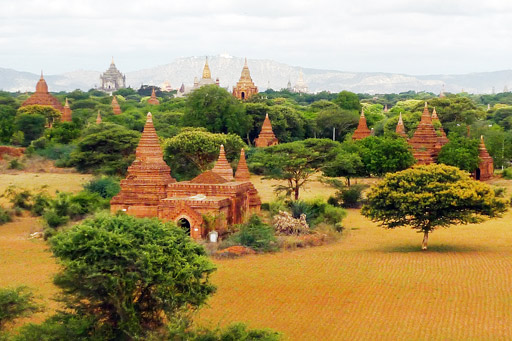
Serene: Temples pepper the plain in the ancient city Bagan.
The budget airplane to Mandalay was rolling along the apron of Bangkok’s Don Mueang Airport ready for take off. The flight attendants — all with model good looks — were giving safety instructions.
Excitement started to swell in me. In just one-and-a-half hours, I would land in Myanmar: the fast-changing homeland of Aung San Suu Kyi. The plane picked up speed. There was no turning back. I flicked through my guidebook, a Lonely Planet published in 2011 that I bought months before but had not read. It seemed appropriate to read the “need to know” page before touching down.
My eye scanned a heading printed in blue font: “cash-only economy”. My heart rate quickened. “Myanmar ATMs don’t accept international cards”. It continued: “Budget carefully and get the right kind of bills before your plane lands in Yangon. Otherwise, you’ll end up in financial trouble”.
I was a couple of hundred feet in the air already. I landed in Mandalay and was sure I was in trouble. With only Rp 600,000 (US$58.2) in my pocket and not a single dollar or kyat in hand, I had visions of sleeping on the streets of Mandalay before making my way to the Indonesian consulate in Yangon to beg them to take me in.
I had been feeling that Myanmar was calling me to visit. The military junta finally released opposition leader Aung San Suu Kyi after years of house arrest in 2010. News reports from Myanmar’s Rakhine state detailed the deadly ethnic and religious conflicts between Burmese Buddhists and Rohingya Muslims. There seemed to a parallel to Indonesia, which overthrew its despot long before Myanmar, and which has also been struggling with religious conflict.
My one-week plan was to visit the dusty commercial town of Mandalay, made famous by songs inspired by Rudyard Kipling’s poem Road to Mandalay, followed by a stop at the ancient city Bagan, where thousands of red-brick pagodas stretch across the plains.
While there are no direct flights from Jakarta to Yangon or Mandalay, the cities with international airports in Myanmar, budget airlines such as Air Asia serve routes such as Singapore-Yangon or Bangkok-Yangon and Bangkok-Mandalay.
The country is transitioning from a reclusive dictatorship hit hard by embargoes to a nation eyed by foreign investors. The economic sanctions that cut off Myanmar (and its ATMs) from the rest of the world were lifted last year. This saved me from a life of indigence on the streets of Mandalay, as I found that the ATMs there and Bagan did indeed accept international cards, thank you very much.
Mandalay, the capital of Burma before the British takeover in 1885, is a bustling town with rows of five-story buildings. Here and there, you will find monasteries with lush trees. While Buddhism is the religion of the majority of Mandalay population, it’s a city of many different faiths. Min, the taxi driver who took me around, said that his wife was Roman Catholic, while he was a Buddhist who believes in nats (spirits). In honor of his wife, he can recite the Lord’s Prayer.
If flying on Air Asia, the airline provides free shuttle bus from the airport to the city, which is an hour’s ride. Mid-range hotels costing between $20 and $40 a night are plentiful.
I chose the Royal City Hotel, which had a rooftop terrace that was good for watching the sunset. Also visible from the rooftop of the hotel, which was near the Mandalay Palace, were the dome of a mosque, the spire of a church and the stupas of the pagoda — as well as ubiquitous satellite-dishes buildings.
Take a boat from the pier to Mingun Paya and climb the giant unfinished red brick stupa. A self-appointed guide said that it was forbidden to climb, as there are cracks and deep cuts between the bricks due to an earthquake. However, teenage boys and young couples were climbing the structure anyway, and I followed suit. From atop Mingun, you can see the river cutting through Mandalay and the white pagodas from afar.
Beautiful: Whitewashed pagodas surround the Kuthodaw Pagoda in Mandalay.
Mandalay city itself is home to interesting places to discover. There is a Big Ben replica in the Ma Soe Yein Nu Kyaung monastery, where hundreds of monks in red robes wander about in the compound carrying books. A friendly monk gave me a tour after seeing me taking pictures of the clock. We entered a meditation building where the fifth floor was a prayer, complete with a statue of Buddha and fake mango trees.
The beautiful teak monastery Shwe In Bin Kyaung is worth a visit. Mango trees surround the compound, with fruit falling to the ground. Flocks of crows can be seen flitting from branch to branch above the meditation house where people sit silently for hours.
The nicest place for sightseeing and people watching is U Bein Bridge in Amarapura. Fishermen line up with their boats near the bridge and throw their nets into the water. Schoolchildren in green sarongs and with faces adorned
with liquid face powder from Jataka trees walk along the bridge to school. The Burmese use the face paint to protect their skin from sunburn, says Min.
On the road: Girls walk to school over the U Bein Bridge in Amarapura.
Due to time limitations, I chose to fly to Bagan from Mandalay. Another option would have been to take a two-day boat trip along Irrawaddy River. Flying has its advantage though as you can see the thousands of Buddhist temples across the plains.
According to the Lonely Planet Guidebook, the Bagan temples were built during a two-and-a half century building burst that began during the reign of Anawrahta, who developed an edifice complex after converting to Theravada Buddhism in the 11th century. His successors continued his building frenzy.
The result is a magnificent sight. Without any other modern buildings — only the domes of the pagoda — I felt as if I was journeying not only to another place, but to another time.
To explore the temples, bicycle rentals are an inexpensive and convenient choice. A strange security policy in Bagan bans foreigners from riding motorbikes, according Aung Myo, a taxi driver in Bagan. He said that even riding as a passenger was not allowed.
I rode my rental bike on dirt road that led to mysterious temples. Sticking to the dirt road will ensure that you avoid other tourists too.
It is still possible in Bagan to sit on top of a pagoda by yourself while watching the sunset over the horizon. The times, however, are changing in Myanmar. So, pack your bags and go.
— Photos by JP/Prodita Sabarini
Prodita Sabarini, The Jakarta Post, Mandalay/Bagan, Myanmar | Travel | Mon, July 29 2013





 Prodita Sabarini